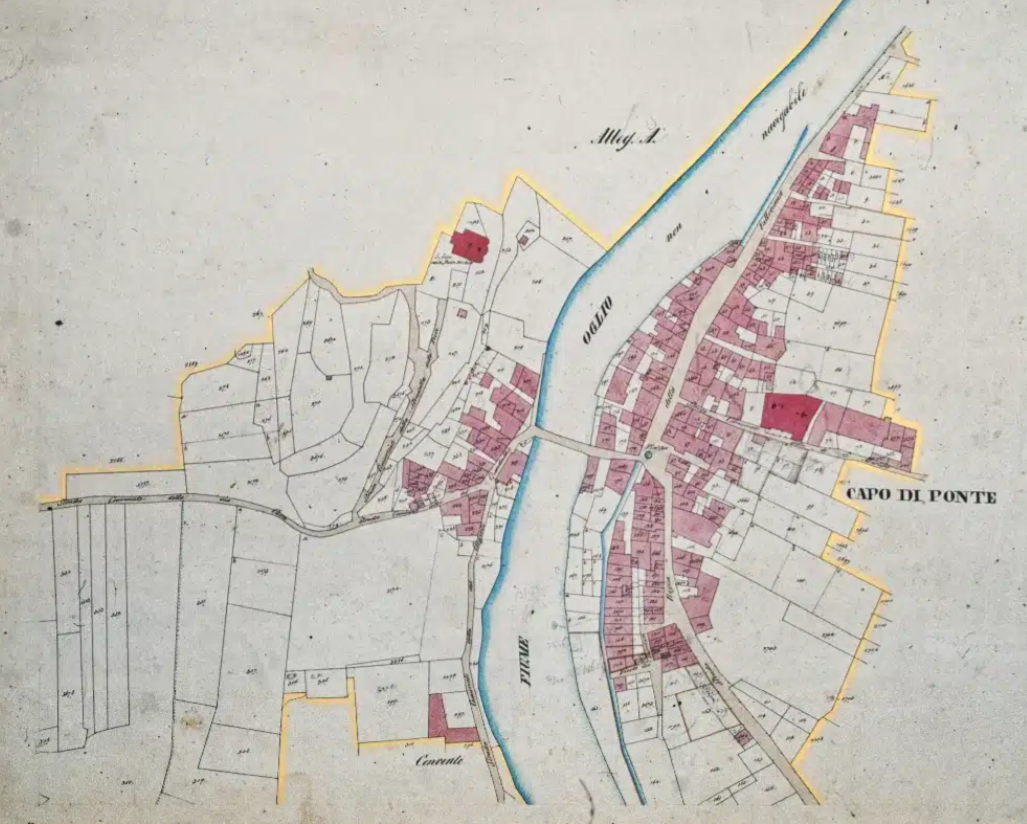
The history and identity of Capo di Ponte are inextricably linked to the Oglio River and the crossing that spans it. The town’s very name originates from an ancient settlement established on the western bank, in the historic district of Réla, which later expanded onto the opposite bank. For centuries, this crossing represented a crucial strategic hub for the surrounding area, so much so that a toll was imposed on the passage of goods.
Originally, Capo di Ponte was not the main centre of the area, but merely a peripheral hamlet dependent on Cemmo. Its importance began to grow during the Late Middle Ages: at the end of the 11th century, the Cluniac monastery of San Salvatore delle Tezze was founded, an important religious community that played a fundamental role in organising social life and agricultural activities on the eastern bank of the Oglio River.
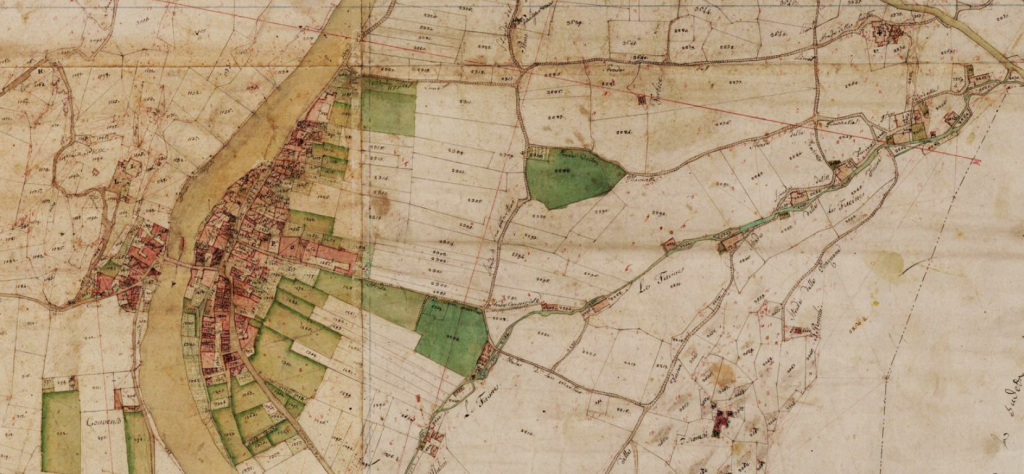
In the mid-13th century, a devastating flood caused by the Re di Tredenus stream (referred to as «Serio» by the historian Father Gregorio in 1698) destroyed the village of Zero (or Zir), presumably located around the site of the present-day Church of Saints Faustina and Liberata. The gradual depopulation caused by the disaster eventually led to the complete disappearance of the settlement.
Further north, across the plain towards Sellero, lay a marshy area known as «Imesigo», crossed by a bridge documented as far back as the early 15th century.
At the centre of the settlement stood the church dedicated to Saint Martin, which may also have been associated with an ancient hospital or hospice for travellers. By 1580, Capo di Ponte had grown in importance to such an extent that the community was able to separate from the historic parish of Cemmo and obtain recognition as an independent parish.
The village developed on the left bank of the Oglio River, expanding from what is now Piazza Roma along the routes of present-day Via Sebastiano Briscioli and Via Italia. To protect the houses from river flooding, an imposing embankment was built, which is still clearly visible in the northern section of Via Italia.
A canal ran directly beneath Via Italia, diverting water from the Oglio and returning it to the river near the bridge. This watercourse supplied several workshops and mills and remained in operation until the 1960s, creating a veritable «island» on the western side of the street.
At the beginning of the 19th century, the village was a thriving economic centre, primarily associated with the iron trade. Iron was worked in eight large-hammer forges powered by a canal fed by the Re stream. The local economy also included nine grain mills, a sawmill and several factories producing hats in the «Trentino style».
The village’s forges were particularly renowned for manufacturing household tools and traditional «small curved knives». Mulberry trees were also widespread throughout the area, playing an essential role in silkworm farming.
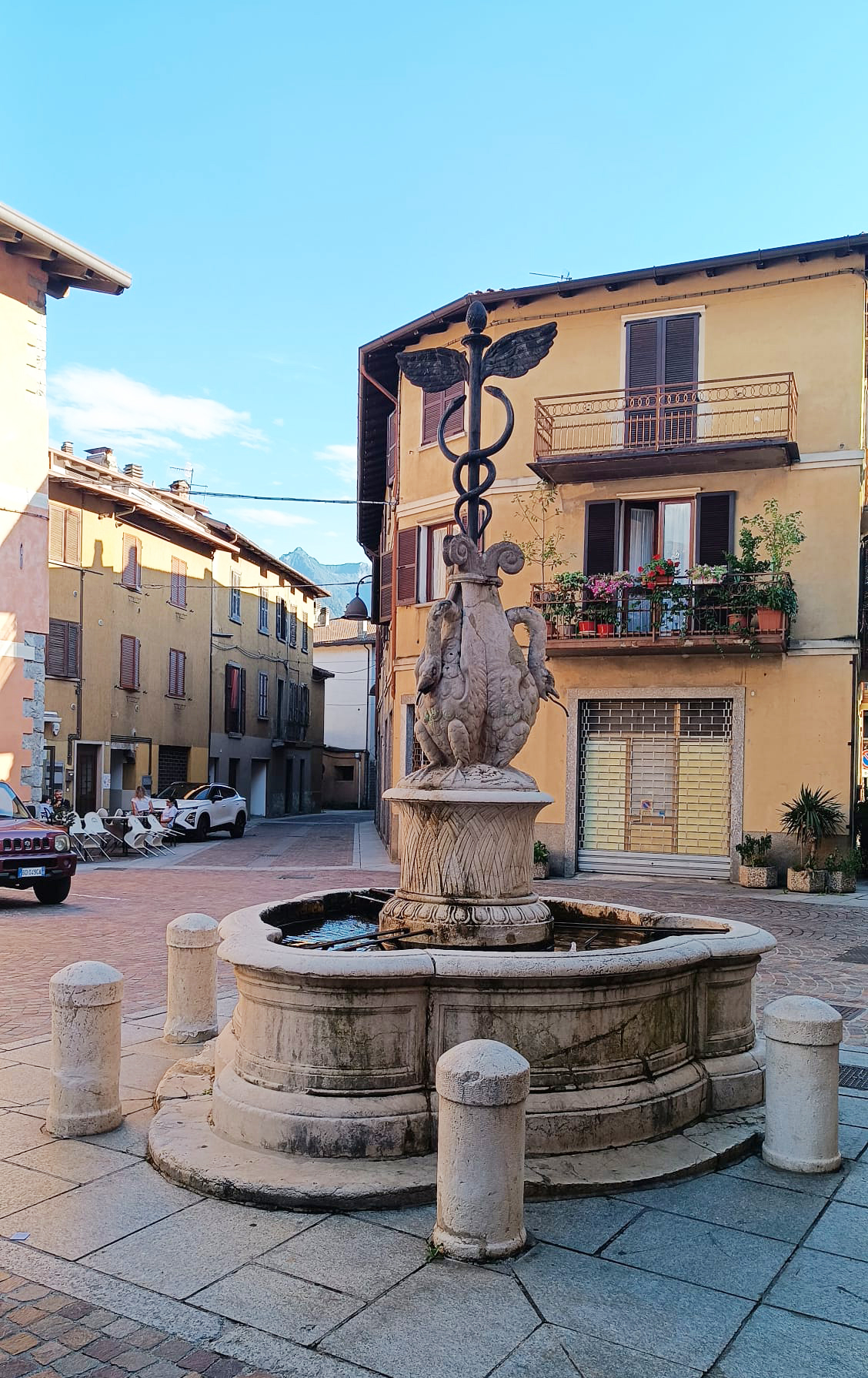
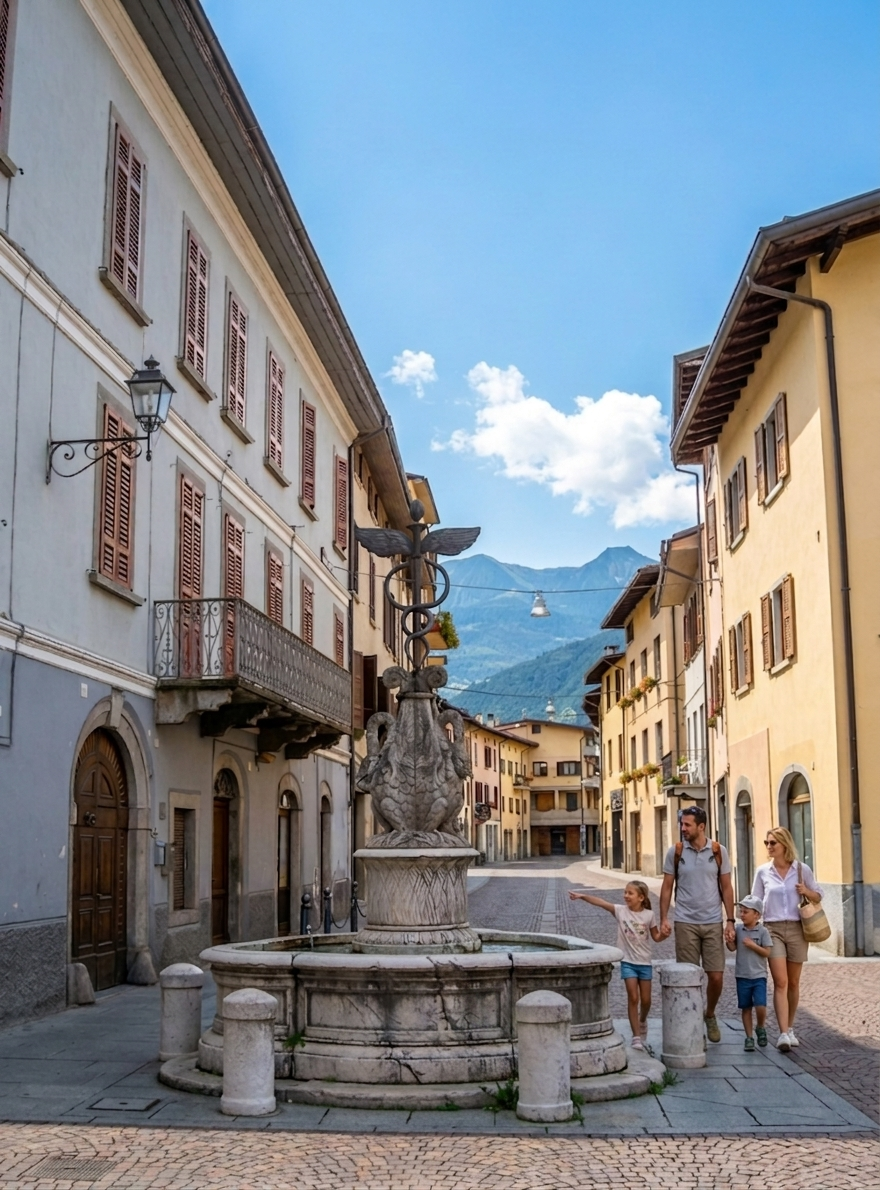
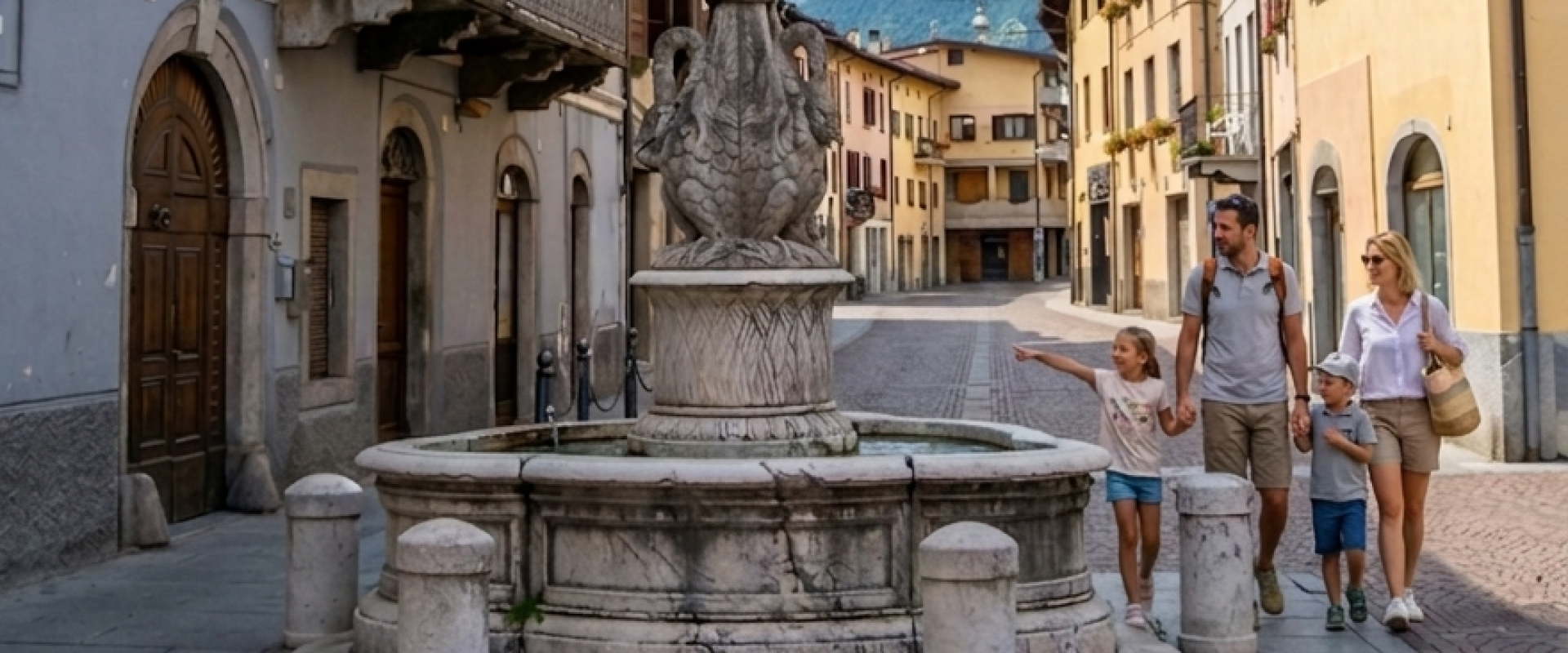
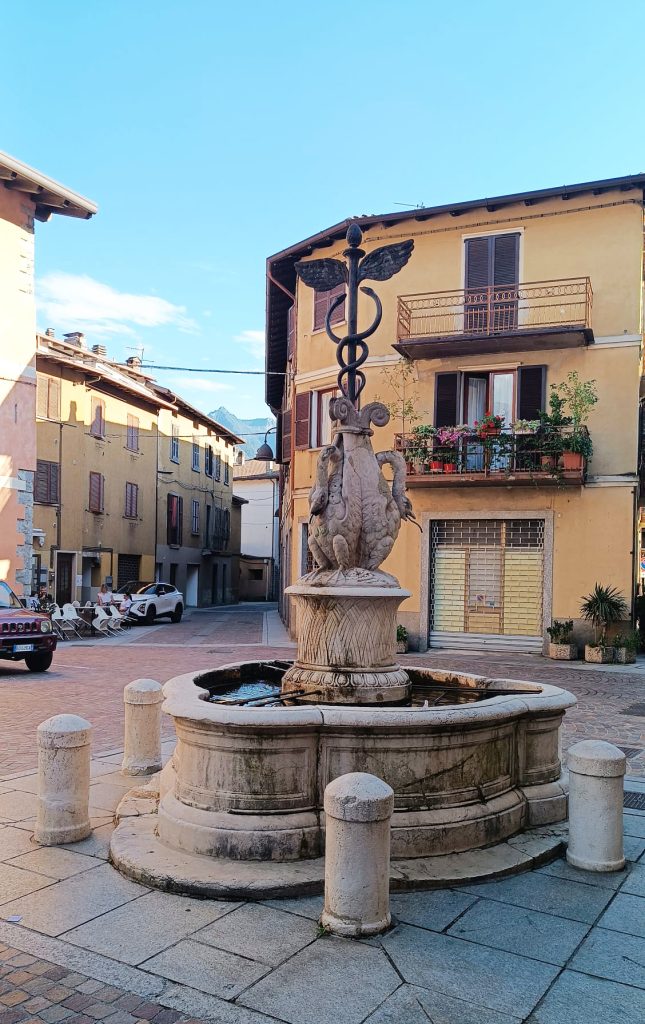 In 1801, the construction of the «public square fountain» was commissioned to «Citizen Carlo Verda of Campione Milanese». Piazza Roma was described as being «surrounded by shops and fine residential buildings».
The village’s historical prestige is still reflected today in its elegant historic residences: to the north of the settlement stand the Panzerini houses, while the southern entrance is marked by the presence of Casa Malaguzzi.
Casa Agostani, also known as «Villa Sacro Cuore», is another building of great historical significance. Today, it houses the MUPRE – National Museum of Prehistory of the Camonica Valley. The building is also closely associated with the memory of the Italian Resistance: a plaque on its façade commemorates the following event:
«On 25 November 1943, in this very place, the partisans of the Camonica Valley appointed Romolo Ragnoli, commander “Vittorio”, as leader of the “Fiamme Verdi” formations of liberated Italy. 25 April 2006.»
A plaque mounted on one of the walls along Via Sebastiano Briscioli commemorates the benefactor after whom the street is named:
«Sebastiano Briscioli, a war-disabled veteran, transformed his suffering into a source of fervent activity. To the workers in the fields and factories, his words were a guiding light of faith. To his fellow disabled veterans, he offered brotherly assistance. For the people, he founded the Cooperative of Veterans. To those in need, he gave his entire fortune. 1898–1924, 29 July.»
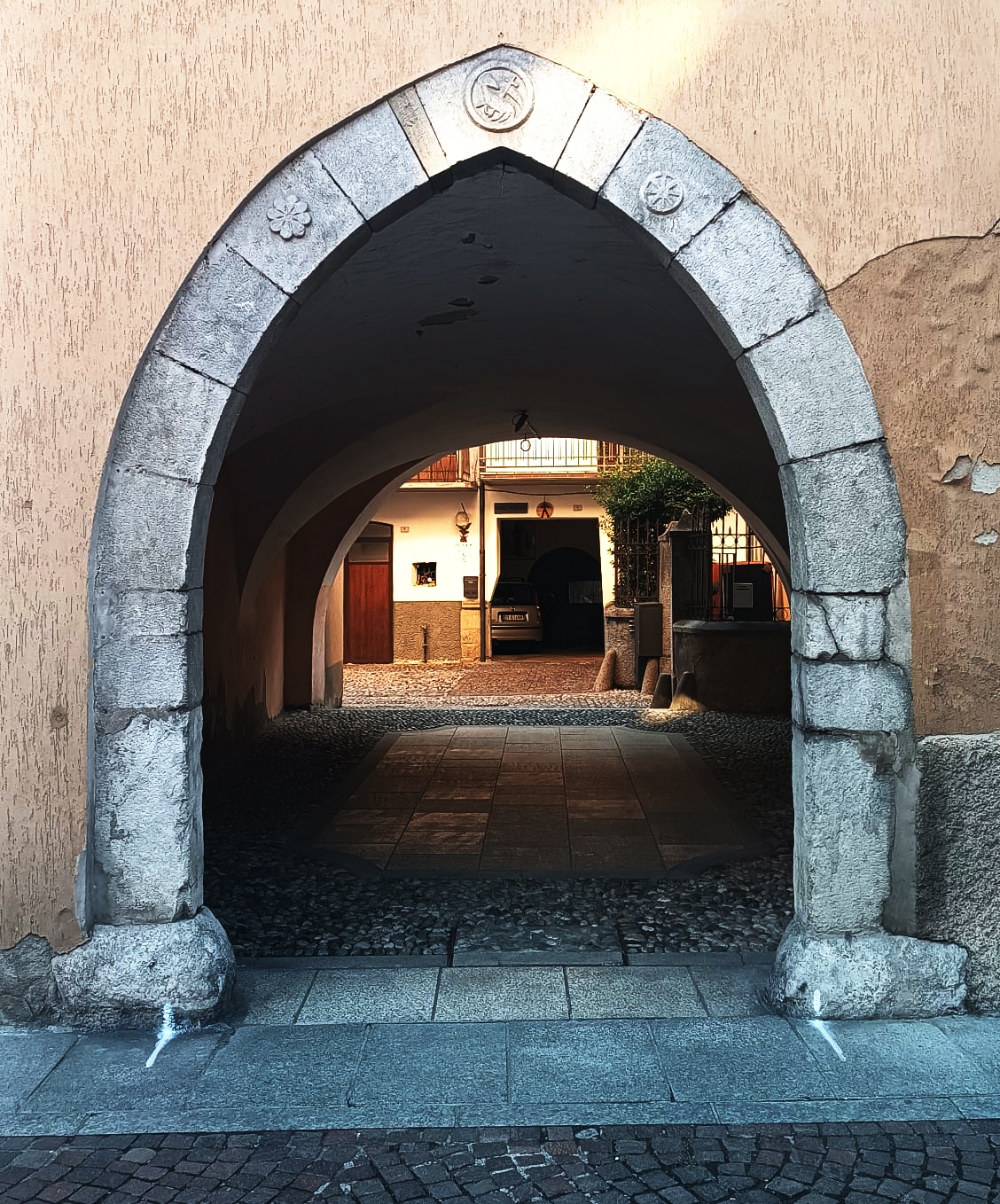
The same building features an elegant doorway made of light-coloured stone, topped with a pointed arch. The entrance is finely decorated with a series of symbols carved into the stone blocks: at the centre, on the keystone, is the Agnus Dei (Lamb of God), flanked by an eight-spoked wheel on the right-hand block and a six-petalled flower on the left-hand block.
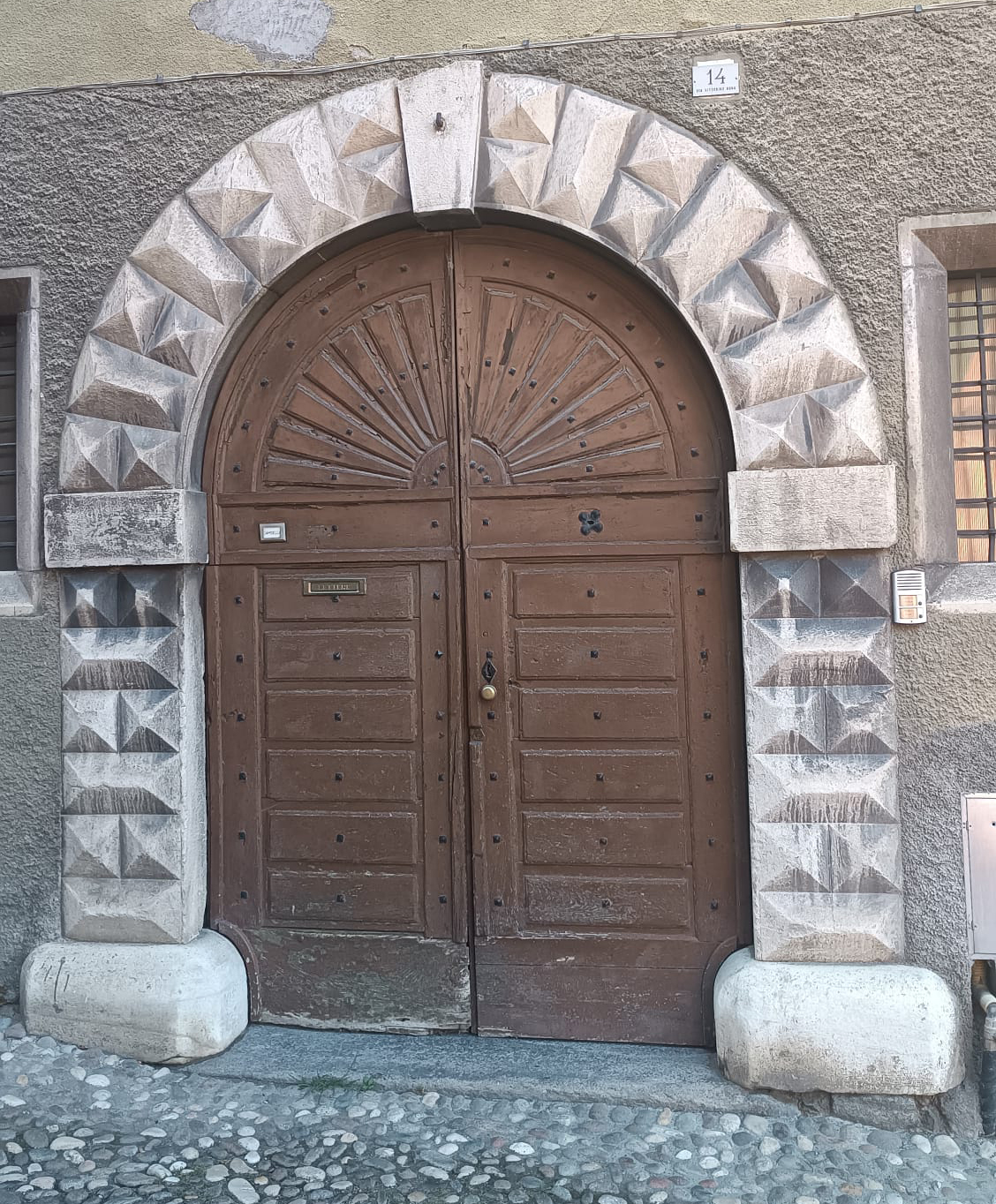
In the ancient district of Réla, a distinctive group of historic buildings has been preserved, featuring mural paintings and fine stone doorways. Among these, a particularly noteworthy 17th-century portal stands out, decorated with diamond-point rustication. Unfortunately, the keystone has lost the ancient coat of arms that once adorned it.
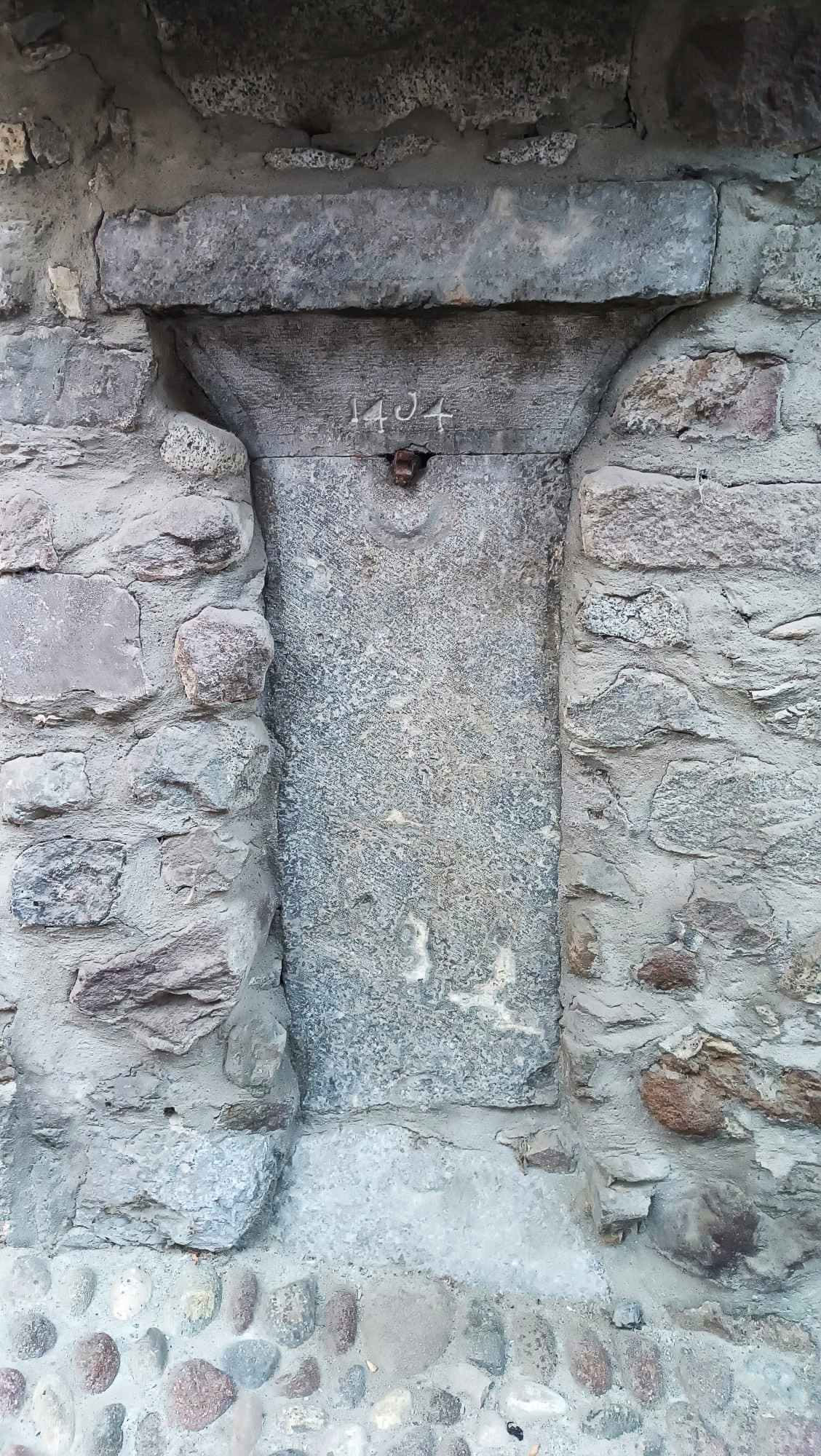
One of the oldest buildings in the complex bears the engraved dates 1494 and 1524, as well as a capital set into the masonry bearing the year 1404.
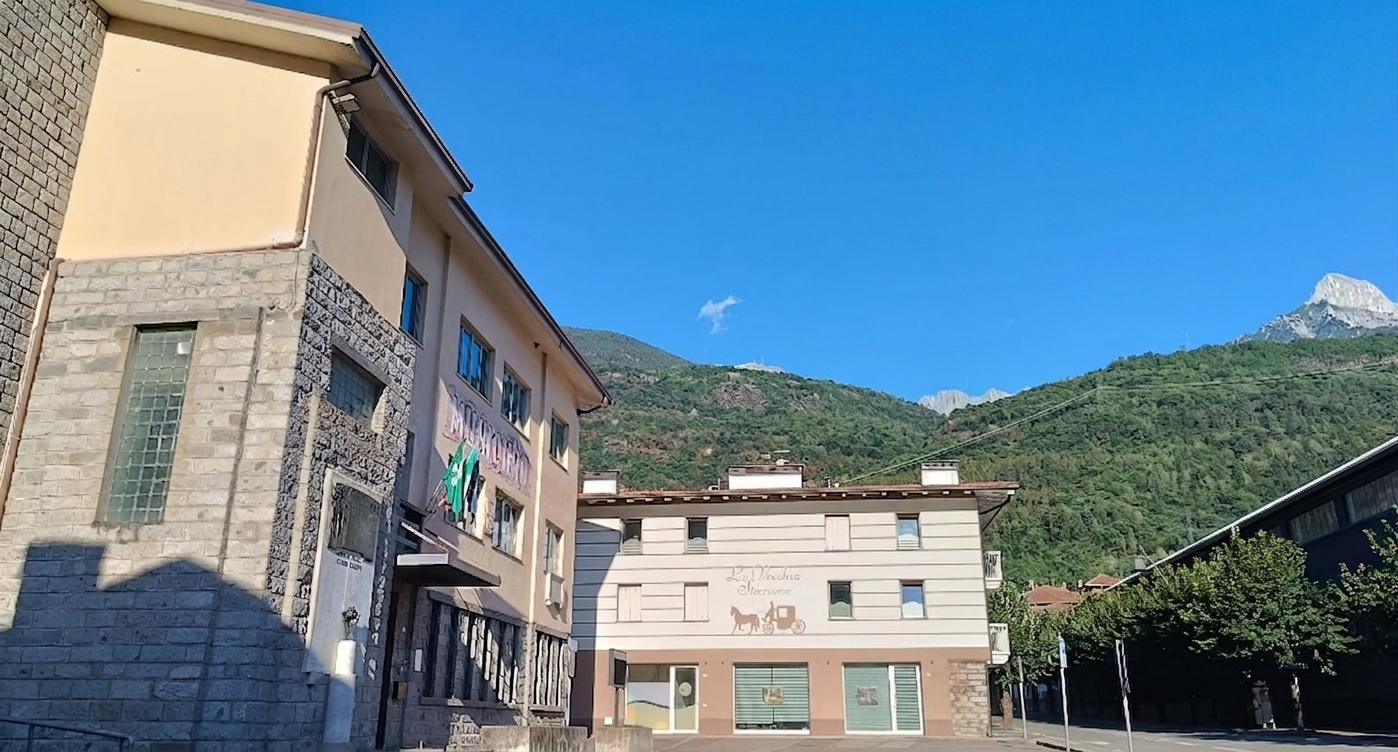
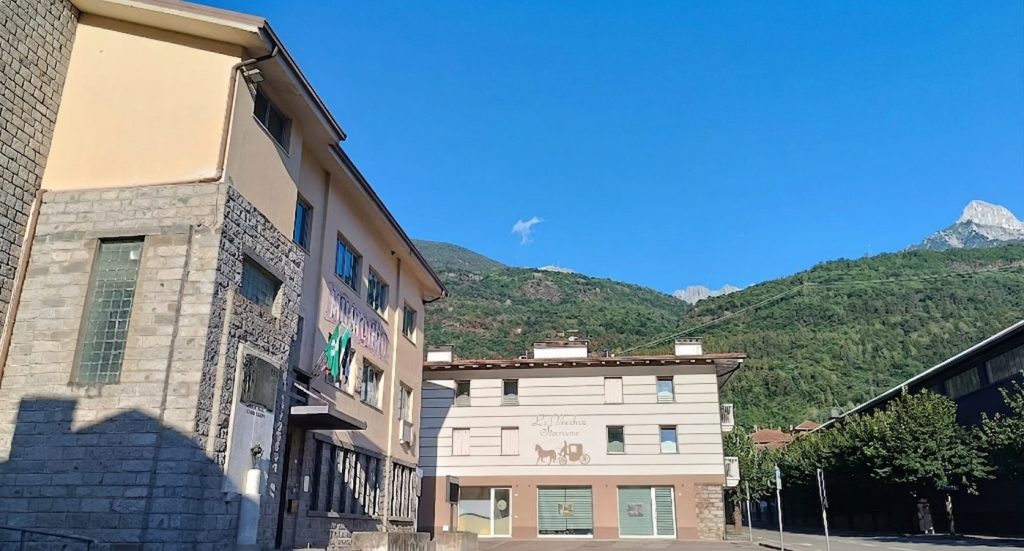 The layout of the village changed at the beginning of the 20th century. On the occasion of the inauguration of the railway station in 1909, a striking tree-lined avenue was created, providing a visual perspective towards the Parish Church of San Siro, located on the opposite bank of the Oglio River. The historic Town Hall and the large Moncini marble-processing factory stand along this avenue.
A Fascist-era plaque bearing the following inscription is still visible on the façade of the Town Hall:«18 November 1935, Year XIV. In memory of the siege. So that the enormous injustice inflicted upon Italy, to which the civilisation of all continents owes so much, may be documented for centuries to come.»
In the second half of the 20th century, the construction of a new state road outside the village helped free the historic centre from through traffic.
The establishment of the National Park of Rock Engravings in 1955 marked a major turning point, bringing Capo di Ponte to international prominence not only in the field of archaeological research but also in cultural tourism.
Every year, hundreds of students and visitors from Lombardy, across Italy and abroad come to the municipality to explore its rock art parks.
The Bridges of Capo di Ponte
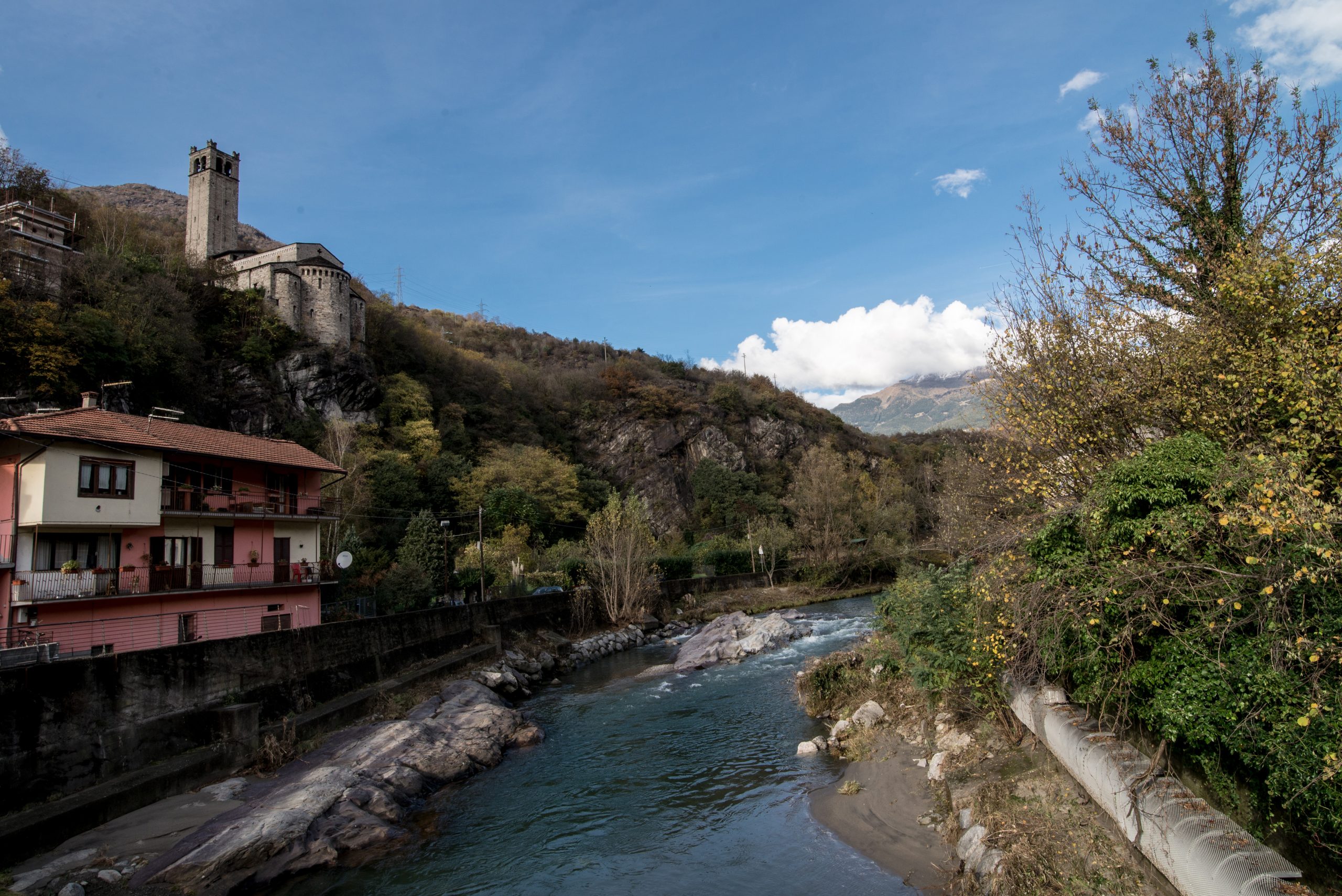
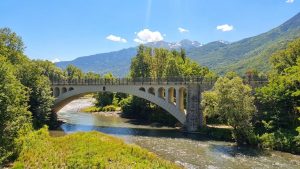 The deep connection between Capo di Ponte and its waterways is reflected in the very name of the village. The first settlement developed around the crossing of the Oglio River, near the historic district of Réla and at the foot of the hill on which the Parish Church of San Siro stands.
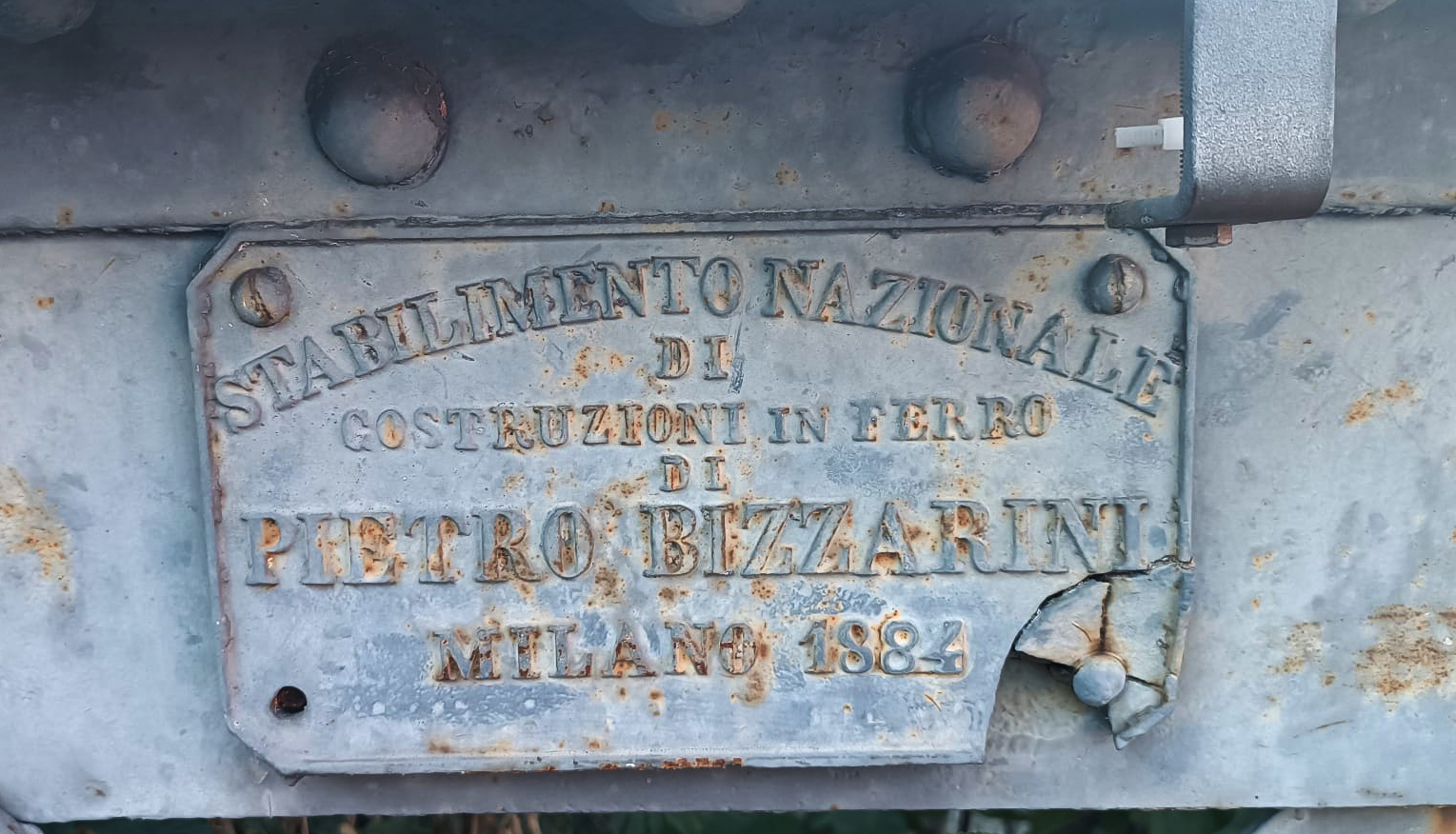
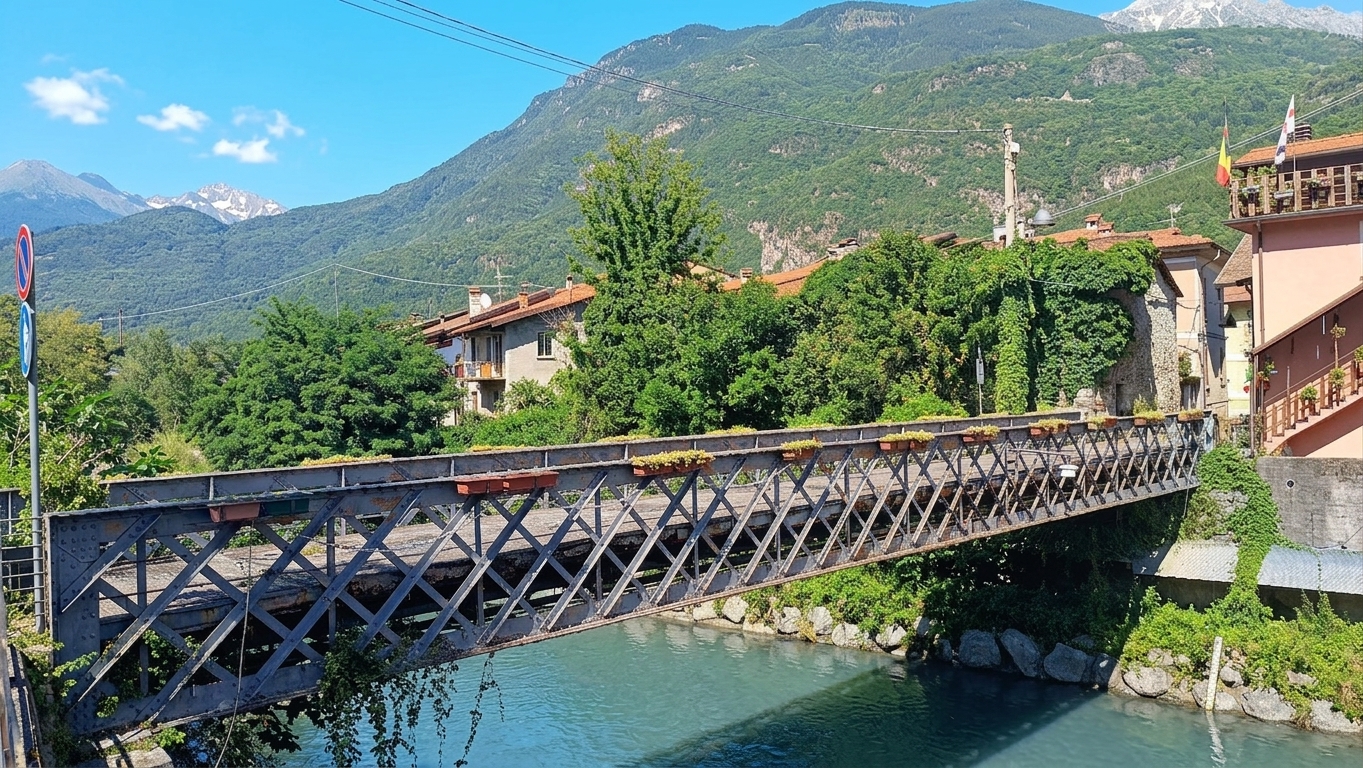
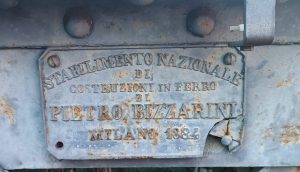
Today reserved for pedestrian use, this bridge is the oldest crossing point in the village. For centuries, it served not only as a strategic transport link but also as a vital driving force for the local economy, as a toll was levied on goods passing through. In the second half of the 19th century, the arched structure was rebuilt using the latest engineering technologies of the time, as evidenced by the metal plaques that are still visible today.
«National Ironworks of Pietro Bizzarini, Milan, 1884».
 A little further north stood the «old» San Rocco Bridge, located in the historic district of «Ymesanigo». Its existence is documented as early as the 1433 Statutes of the Camonica Valley, which mention it as one of the crossing points along the valley’s main communication route, the Valeriana (or Valleriana) Road. The bridge takes its name from the nearby small church dedicated to Saint Roch.
The ancient structure, described as a «black granite arch», was blown up in 1908 using blasting charges to make way for the concrete railway viaduct. The «new» San Rocco Bridge, which is still in use today, was designed in the late 19th century as part of the modernisation of the «Royal Road» and was subsequently built in the early 20th century.
The most recent development in the road infrastructure dates back to the second half of the 20th century, with the construction of the bridge on Via Santo Stefano. Located at the southern entrance to the village, this crossing spans the Oglio River, directly connecting Capo di Ponte with the nearby hamlet of Cemmo.
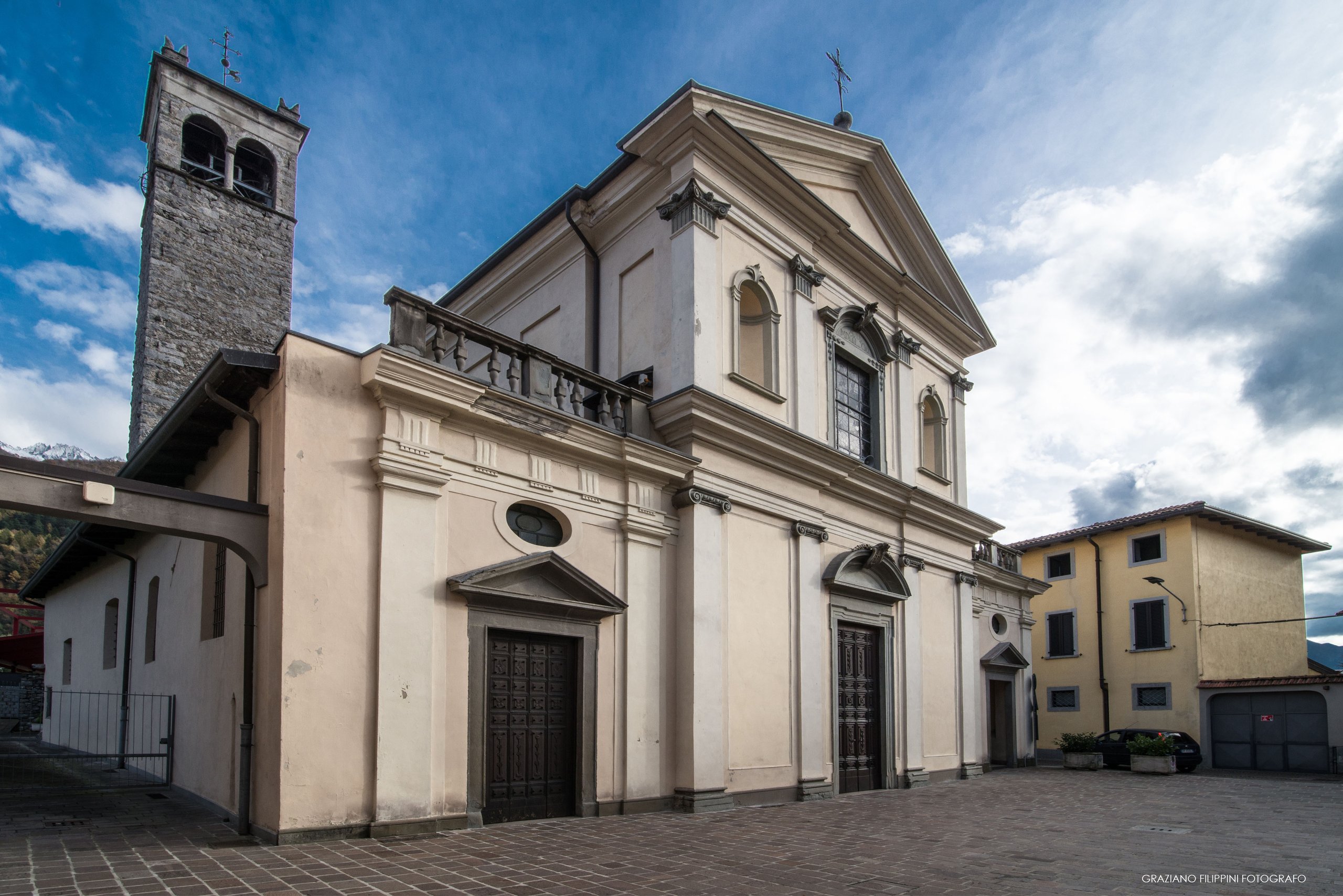 The dedication to Saint Martin, patron saint of the poor and travellers, is relatively widespread throughout the Camonica Valley (found in Villa Dalegno, Corteno Golgi, Cerveno and Erbanno, with early historical references also recorded in Cimbergo and Borno). It suggests a very ancient Frankish influence, linked to Charlemagne’s donation of the Camonica Valley territory in 774 to the Church of Saint Martin of Tours. It is also believed that a hospice for travellers once stood near the original chapel.
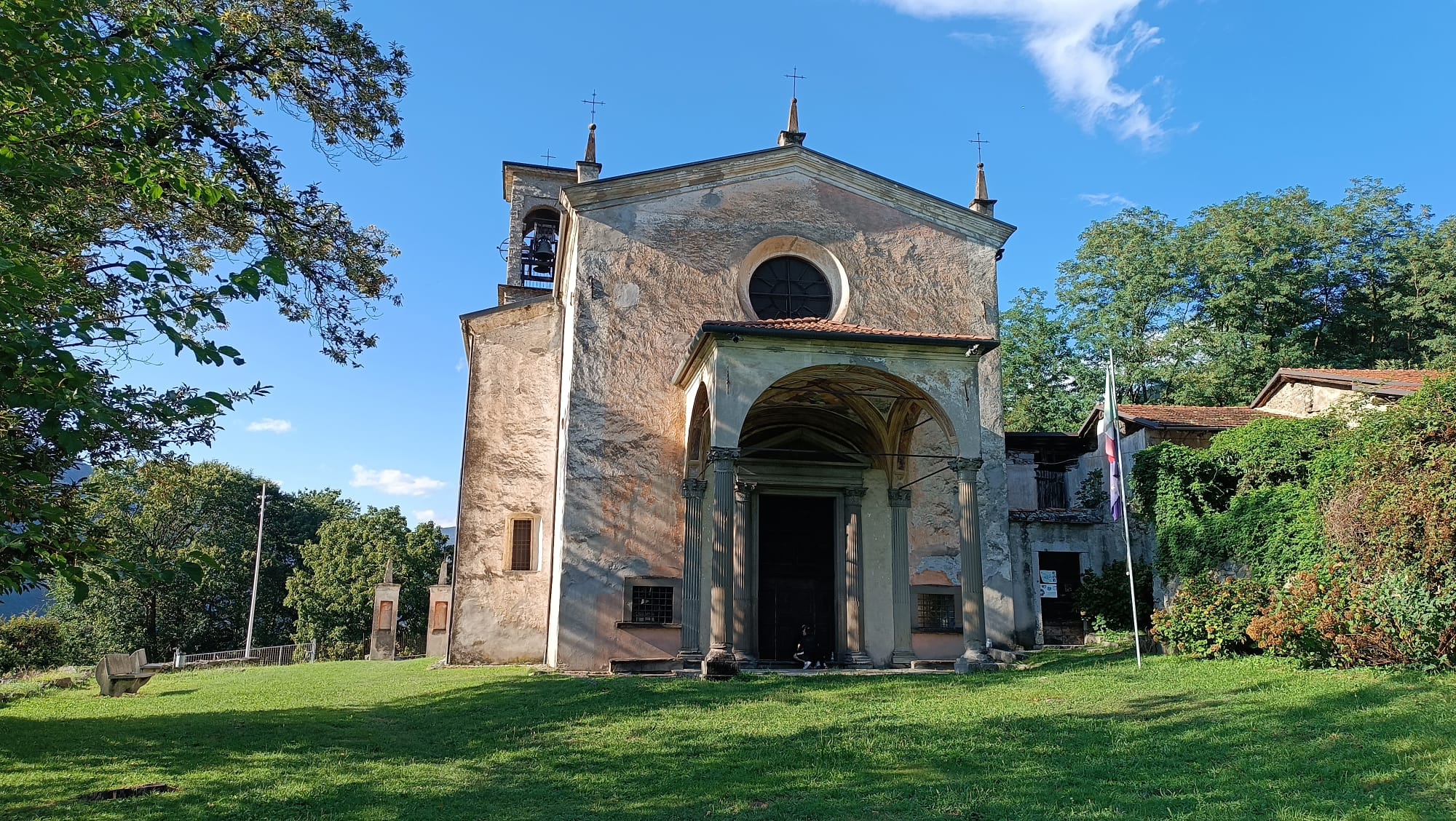
The history of the building took a decisive turn in 1580, during the celebrated pastoral visit of the Archbishop of Milan, Saint Charles Borromeo. On that occasion, the church was elevated to the status of an independent parish church for Capo di Ponte, separating from its mother church in Cemmo and becoming the main religious and community reference point for the local population.
During the 17th century, and particularly with the major renovation works carried out in 1766, the original medieval structure was completely rebuilt, taking on imposing proportions and featuring grey Sarnico stone finishes and an elegant portico along its southern side, an architectural feature rarely found in the Camonica Valley.
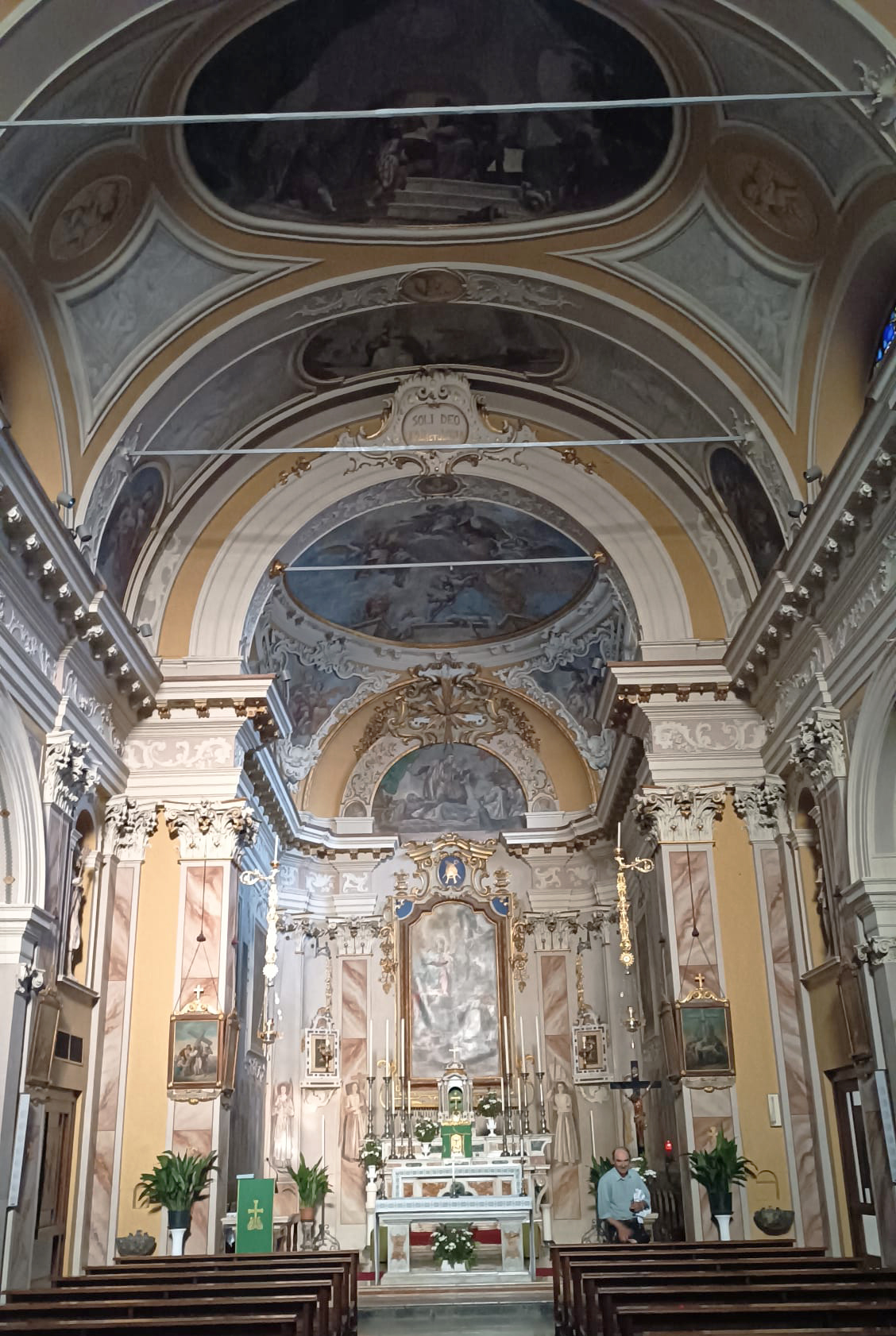
The interior houses a rich collection of sacred art. The high altar, crafted by the stonemason Carlo Gerolamo Rusca from Como, is surmounted by an altarpiece painted in 1736 by Francesco Monti (Bologna, 1685 – Brescia, 1768), depicting the Virgin Mary with the Christ Child and Saint Martin.
Monti also frescoed the choir with The Glory of Saint Martin and The Four Cardinal Virtues, while the vault of the central nave was decorated in 1770 by the painter Enrico Albrici (Vilminore di Scalve, 1714 – Bergamo, 1773), featuring episodes from the life of the patron saint. Among the paintings, the church also preserves a 16th-century altarpiece attributed to the workshop of Moretto.
 Popular devotion is reflected in the side altars. Among them, the Chapel of Saint Vittorino stands out. The saint was invoked for protection against natural disasters, and his relics arrived from Padua in 1681. The altar, renovated in the Neo-Gothic style in the late 19th century, stands alongside that of Our Lady of the Rosary.
On the opposite side is the Altar of the Agony, which houses an altarpiece painted in 1702 by Francesco Paglia (Brescia, 1635–1714), depicting the… The Sorrowful Virgin with the Dead Christ.
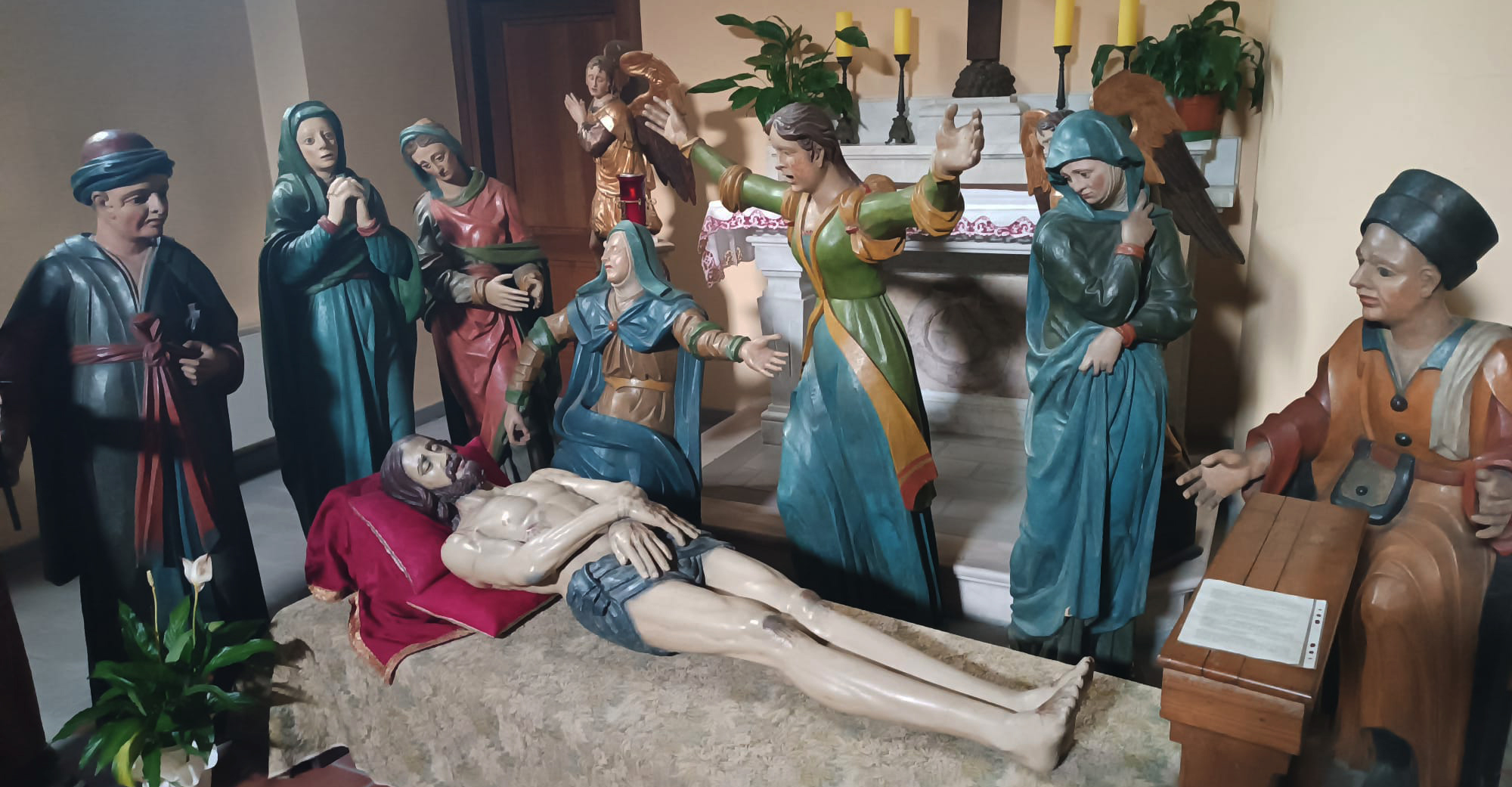
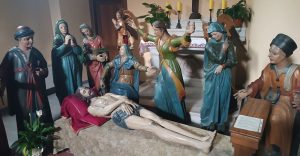
An internal passage leads to the Oratory of Saint Francis, once the meeting place of the local Confraternity of Discipline. The building houses a work of art of great emotional impact: the wooden group depicting theLamentation over the Dead Christ. Created from the 16th century onwards and transferred here from the small Church of Saints Faustina and Liberata to ensure its preservation, the life-size sculptures form a deeply moving and dramatic sacred representation, designed to encourage the faithful to identify with the suffering of Christ’s Passion.
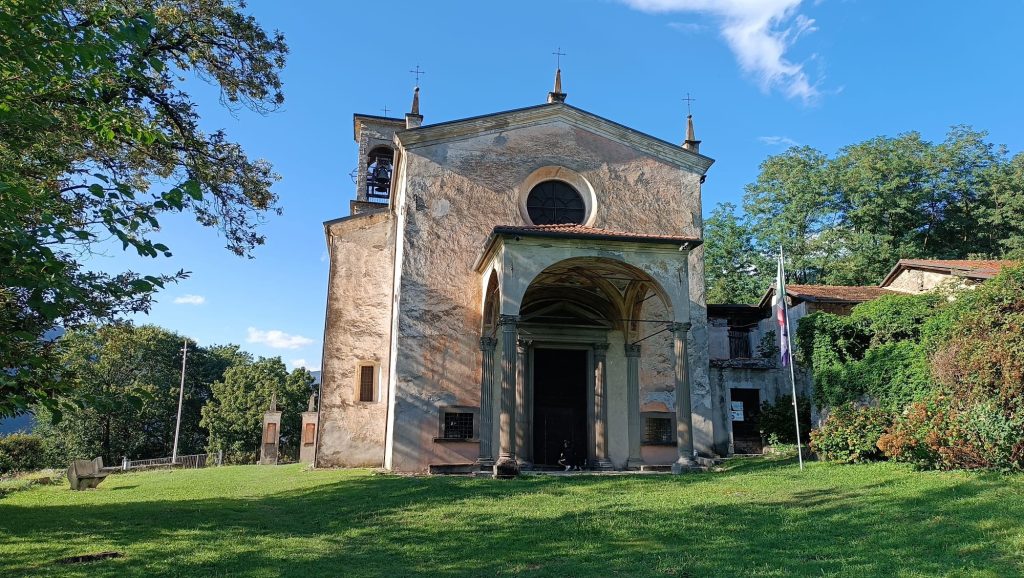 The Church of Saints Faustina and Liberata in Capo di Ponte is a captivating place where popular religious devotion intertwines with ancient history and the natural landscape of the Camonica Valley.
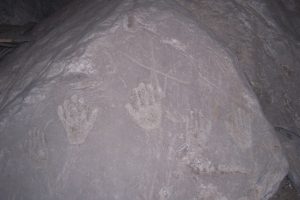
The complex is particularly renowned for a local tradition associated with a miracle said to have taken place at the end of the 13th century. According to legend, a devastating landslide broke away from the surrounding mountains and threatened to overwhelm the ancient settlement. Saints Faustina and Liberata, together with Saint Marcellus, are said to have intervened, stopping the enormous boulder in its tracks with their bare hands. Even today, the rock bearing the imprints attributed to the palms of the two saints is preserved with in the complex.
From an architectural perspective, the present-day building is the result of an extensive renovation completed in 1614, undertaken to bring the structure into compliance with the directives issued by Saint Charles Borromeo during his pastoral visit in 1580. The entrance is preceded by an elegant seventeenth-century portico, featuring grey stone columns and a frescoed vault depicting God the Father surrounded by angels.
A fragment of the ancient apse, located near the presbytery, is all that remains of the original medieval structure. Inside the church are altars dedicated to Saints Philip and James and to Saint Charles Borromeo, as well as important artistic treasures in the presbytery: a rare seventeenth-century tooled leather altar frontal and a canvas depicting the Ascension of Christ, attributed to the circle of Palma il Giovane. The Chapel of the Holy Sepulchre also housed the renowned wooden Lamentation group for many years, which is now preserved in the Parish Church for conservation reasons.
The church is surrounded by an atmosphere of great tranquillity. The churchyard is flanked by the remains of the ancient hermitage, which remained in use until the early twentieth century as accommodation for the custodians.
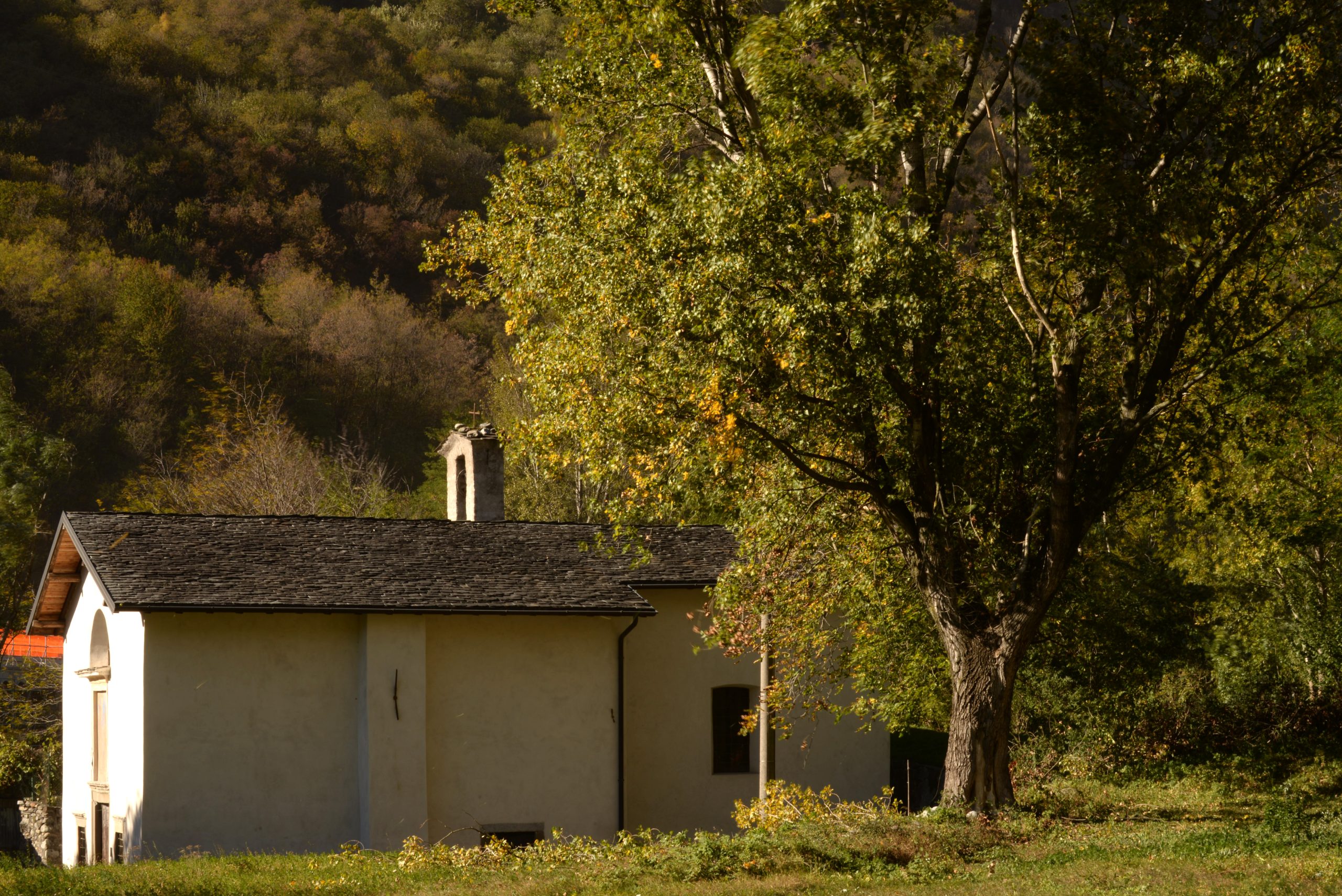
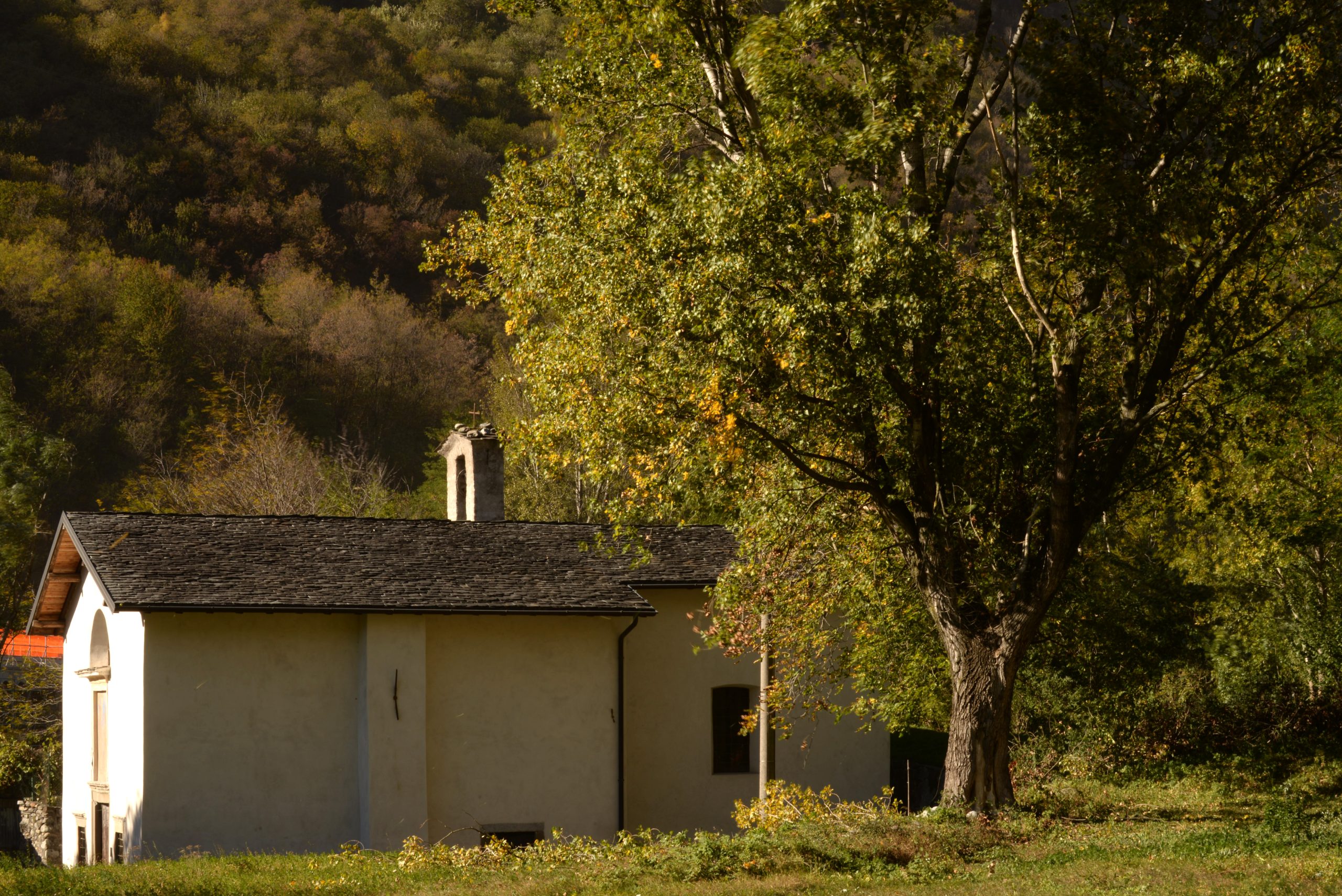
Restored in 2001, the small Church of Saint Roch retains its early seventeenth-century appearance, with a gabled façade topped by an open bell gable. The entrance is framed by a grey Sarnico stone portal, flanked by two small barred windows. Between the portal and a semicircular window are traces of a now deteriorated fresco, in which the figures of the Madonna and two saints can still be made out.
Inside, the original altarpiece is no longer present, having been removed following thefts in the past. However, the wooden altarpiece frame remains, surrounding the frescoes on the rear wall, which depict the Virgin Mary flanked by Saints Roch and Sebastian.
Theancient valley road (ViaValeriana) ran alongside the church and crossed the Oglio River via an old bridge, which was demolished in the early twentieth century.