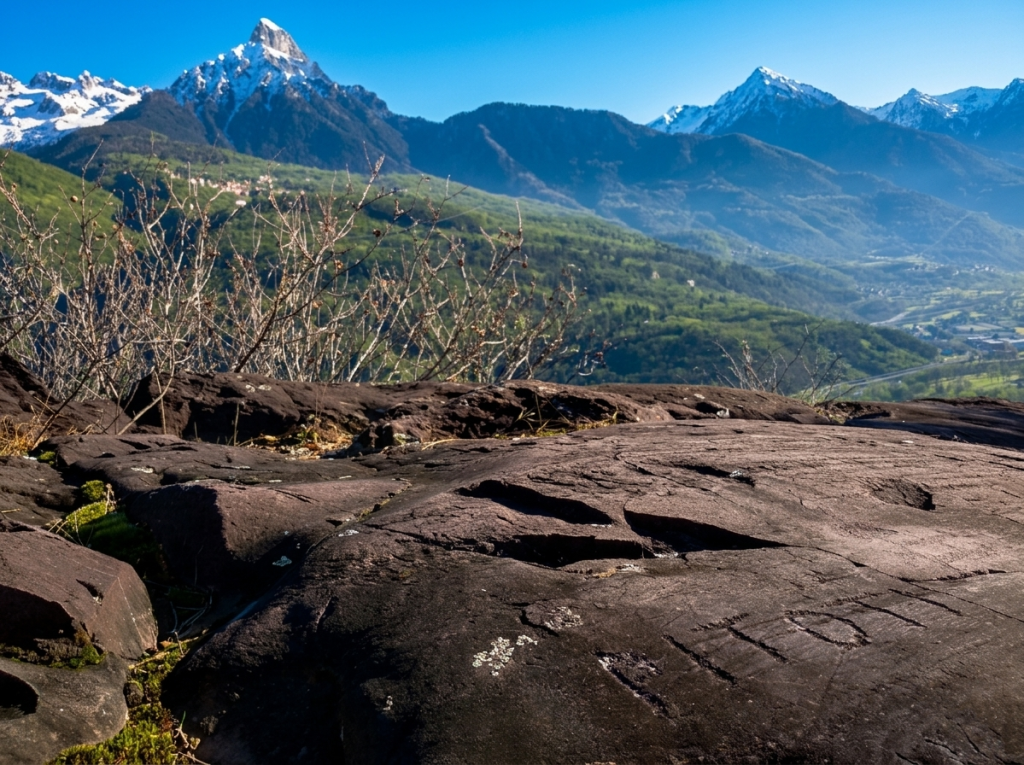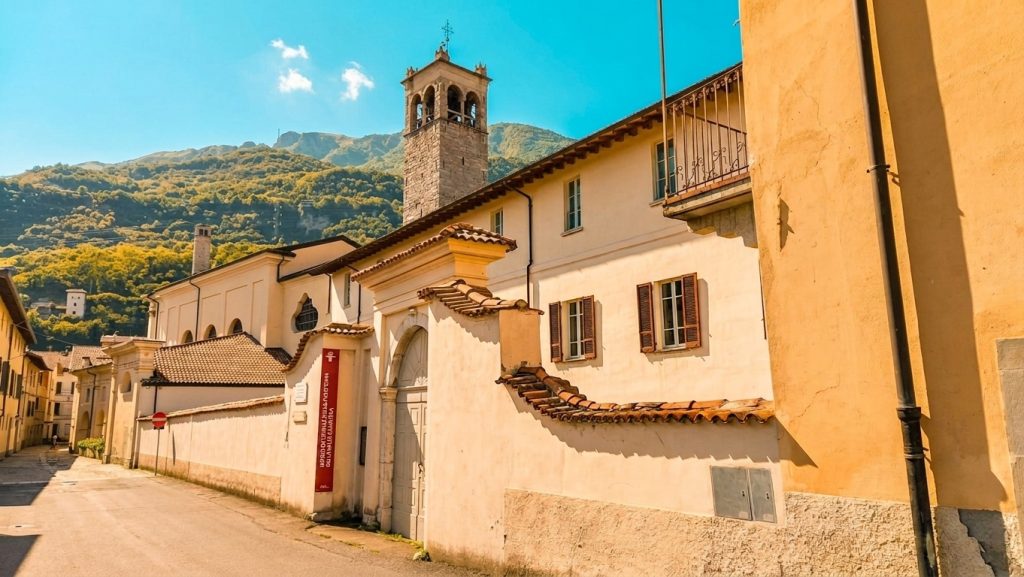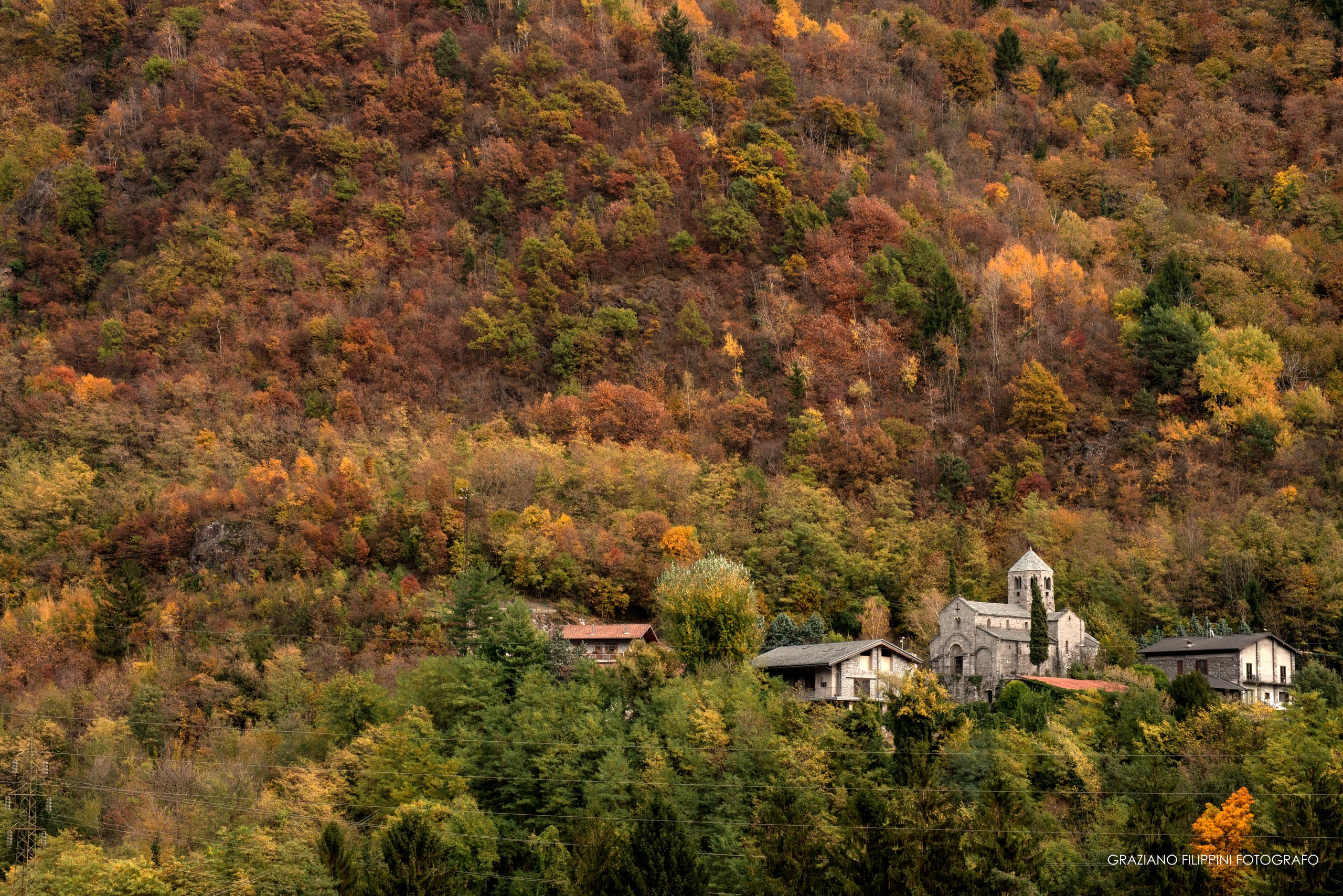
 The ancient cluniac monastery of San Salvatore stands on the left bank of the River Oglio, on a hill northeast of the village of Capo di Ponte, in Valcamonica. It is one of the most important monuments of Lombard Romanesque architecture and the only documented Cluniac priory in the entire valley. Its medieval origins date back to the final decades of the 11th century, with its first written record dating to 1095.
Designed as a monastic centre dependent on the Cluniac Abbey of San Paolo d’Argon, the complex subsequently underwent a rapid decline beginning in the 13th century and experienced various periods of commendatory administration and abandonment over the following centuries.
In the post-revolutionary period, ownership passed into private hands. The complex was subsequently restored in the 19th century and finally acquired in 2002 by the Camunitas Foundation, which is responsible for its preservation and enhancement.
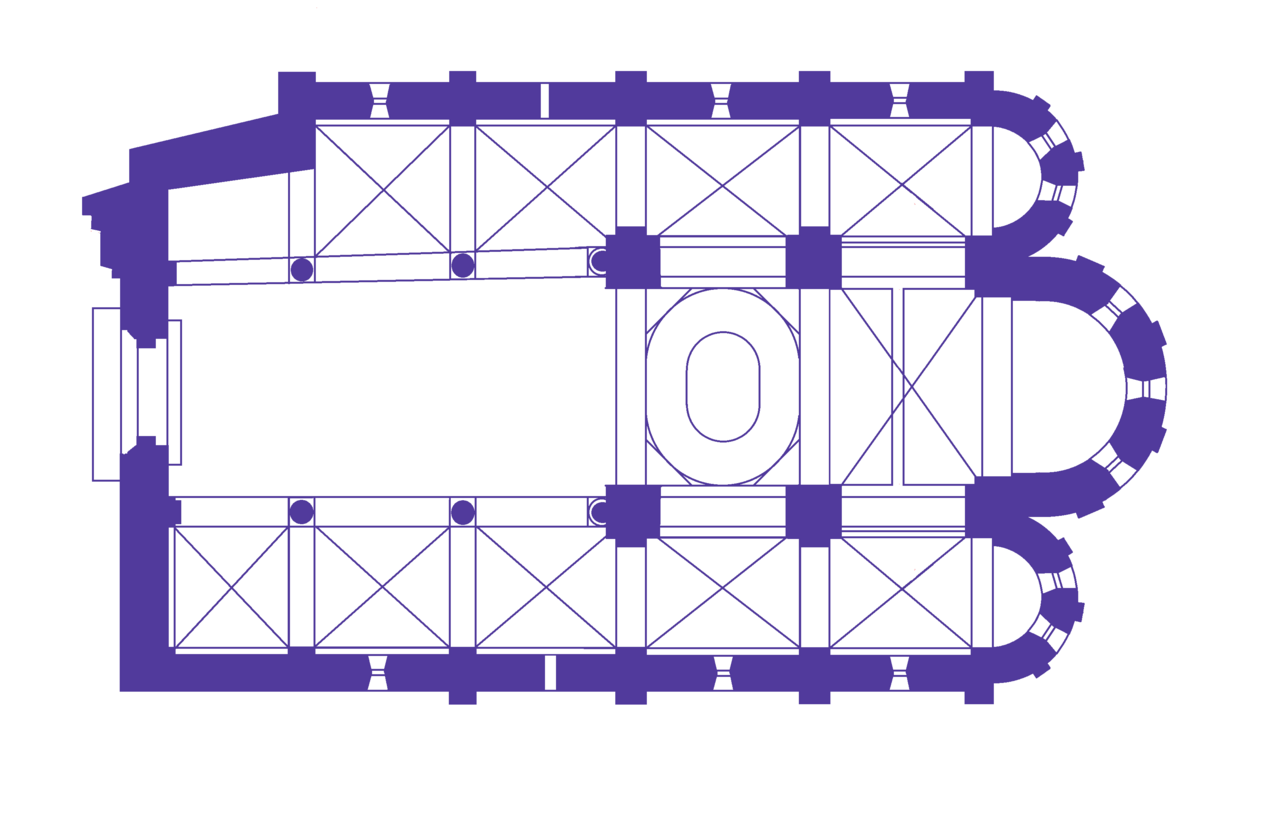
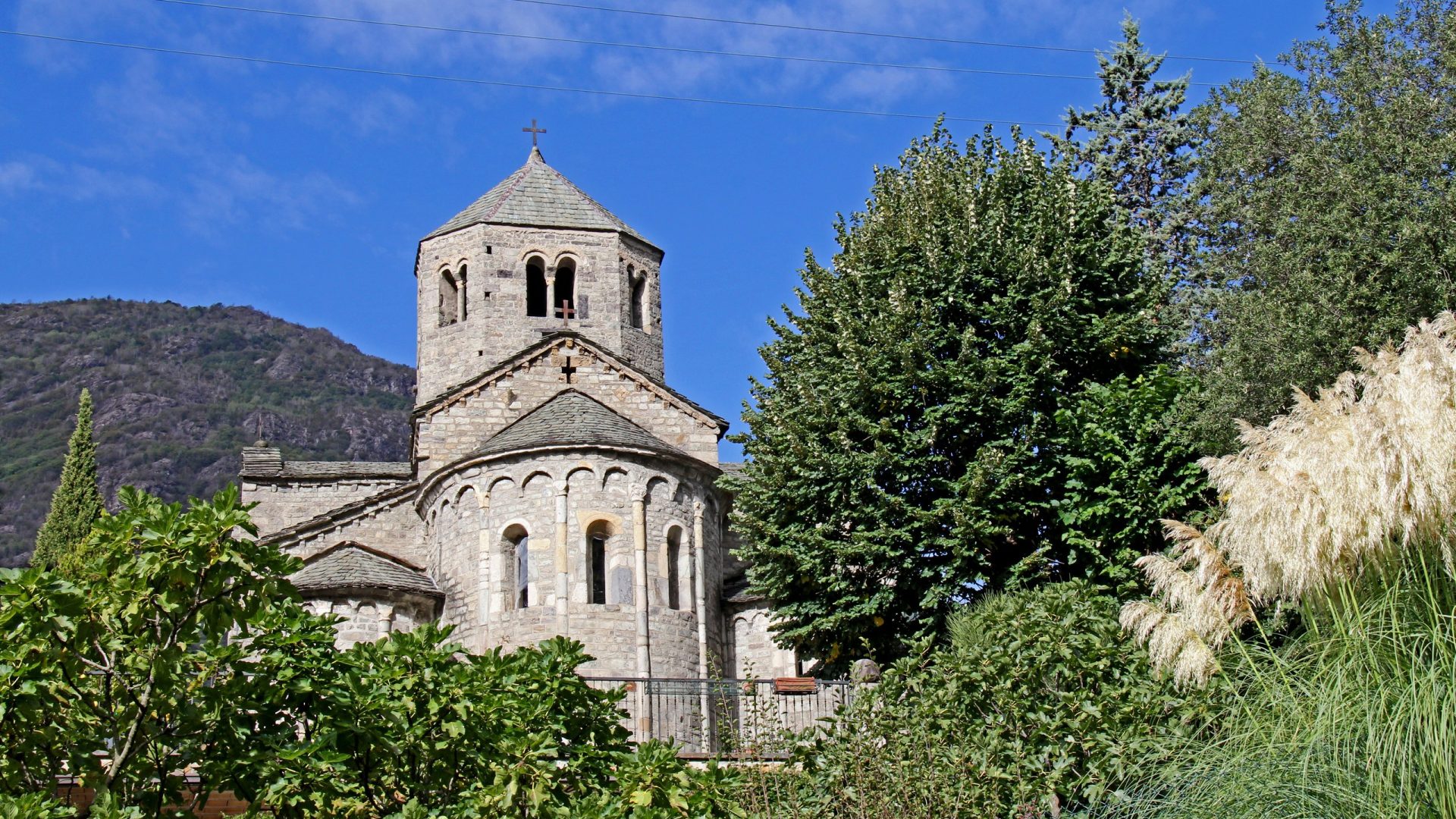
The monastic church, dedicated to the Transfiguration of the Saviour, is the surviving core of the monastery: a jewel of Romanesque architecture, characterised by massive volumes, three semicircular apses and a distinctive octagonal lantern tower rising above the crossing of the naves.
Built from squared stone blocks, the façade features a round-arched portal with splayed jambs. The three-aisled interior is divided by columns adorned with sculpted capitals depicting eagles, fantastical creatures, amphisbaenae and sirens, reflecting the imagery of the medieval world. An octagonal lantern tower rises above the presbytery.
In addition to its architectural significance, the monastery is associated with a medicinal herb garden, set within a picturesque natural landscape and offering a contemporary reminder of ancient monastic practices of healing and cultivation.