Master Paroto (or Pasoto) was one of the most fascinating and representative artistic figures of the 15th century in eastern Lombardy. Active in the mid-15th century and associated with the village of Cemmo (now a hamlet of Capo di Ponte), this painter perfectly embodies the stylistic transition between the International Late Gothic style and the first subtle influences of the Lombard Renaissance.
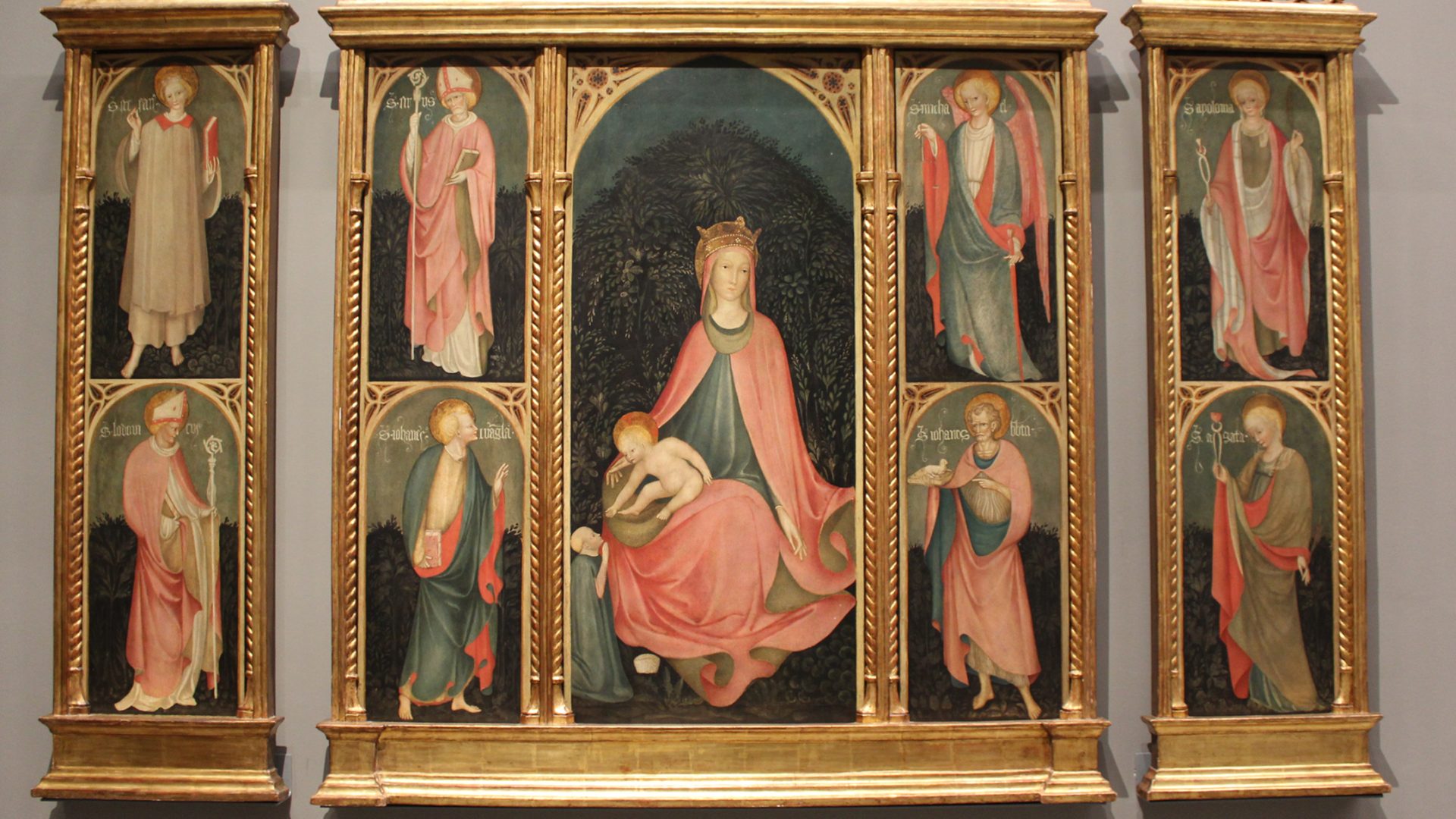
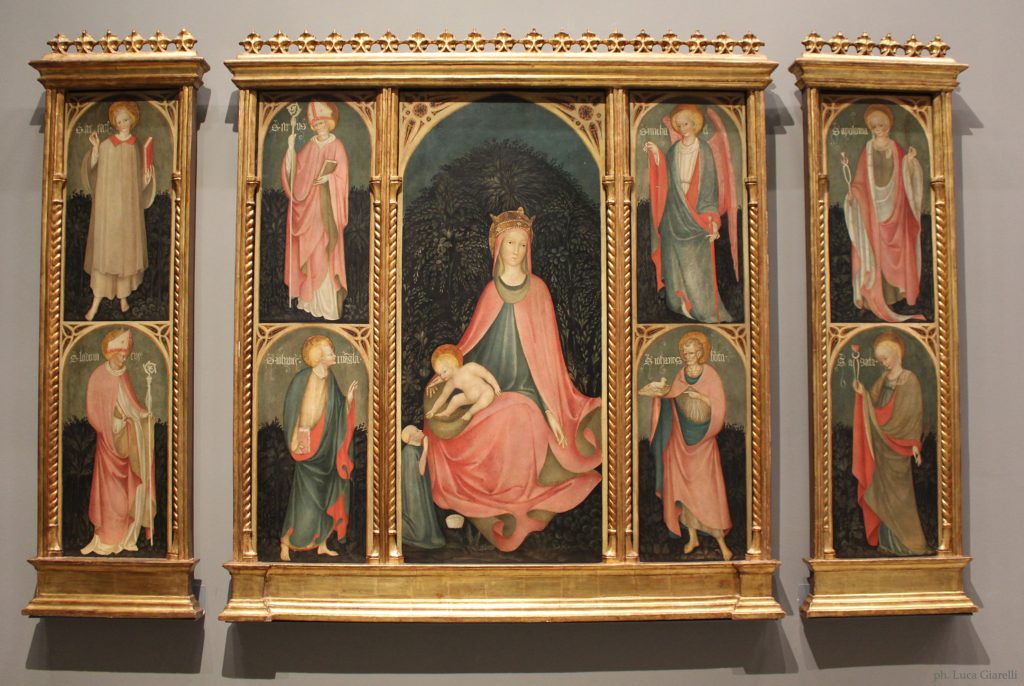
Master Paroto’s fame is inextricably linked to the celebrated San Siro Polyptych, created in 1447 for the Parish Church of San Siro in Cemmo. The work, painted in tempera on panel with an exceptionally refined gold background, depicts the Madonna enthroned with the Child at its centre, flanked by a series of saints particularly venerated by the local community (including Saint Siro, Saint John the Baptist, Saint Paul and Saint Peter).
Historically, the altarpiece bore the artist’s signature and date (“Parotus de Cemo pinxit 1447”). However, the original handwritten inscriptions are no longer visible, having unfortunately been lost due to various events and restoration work carried out during the 20th century.
Today, the San Siro Polyptych is no longer housed in its original location in Capo di Ponte, but is preserved in the art collections of the Tosio Martinengo Art Gallery in Brescia, where it represents one of the most valuable examples of 15th-century art from the Brescia area.
Paroto’s artistic style is distinguished by its elegant formal execution, meticulous attention to detail in the depiction of garments, and warm, enveloping use of colour. While retaining the solemnity typical of the International Gothic style, his figures reveal an awareness of the Venetian-Lombard painting tradition of the period. Although his subjects’ faces are hieratic in appearance, they convey an idealised gentleness, inviting devotional engagement with the faithful.
The presence of Master Paroto in Cemmo demonstrates that, as early as the mid-15th century, this small village in Valcamonica had become a thriving centre of artistic activity. Paroto paved the way for the great flourishing of Camunian painting, which, just a few decades later, would witness the emergence and rise to prominence of his ideal “successor” and fellow countryman: Giovanni Pietro da Cemmo.
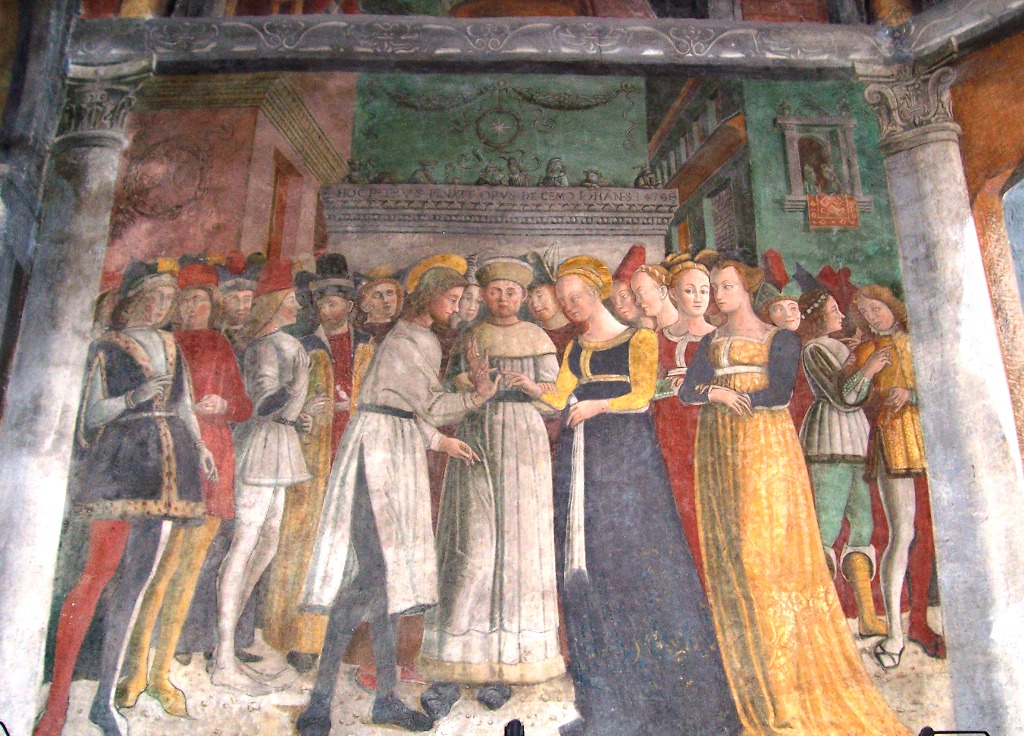
Giovanni Pietro da Cemmo was one of the leading exponents of Renaissance painting in eastern Lombardy. He originally came from the hamlet of Cemmo, in the municipality of Capo di Ponte, which was the main administrative centre at the time.
Very little is known about the artist’s life. He was perhaps born in 1456, but it is certain that he was active between 1474 and the early years of the following century, working across a wide area encompassing the provinces of Brescia, Crema and Cremona. His documented works reflect a Late Gothic artistic style, strongly influenced by the artistic traditions of Brescia and the Veneto region.
In the early years of his career, the painter made his mark through the decoration of important places of worship in the valleys of the Brescia area. Among the most significant works from this period are the decorative cycle in the presbytery of the Church of the Annunciation in Piancogno (1474–1475) and the Church of San Rocco in Bagolino (1483–1486), where he worked alongside his father Pasoto.
Over the years, Giovanni Pietro da Cemmo’s painting style underwent a profound evolution, becoming enriched through exposure to the new artistic developments of the Po Valley Renaissance. During the mature phase of his career, the artist expanded his sphere of activity well beyond the boundaries of Valcamonica: he worked in Cremona (1498–1504) at the Convent of Sant’Agostino and in Crema, where he decorated the refectory of the local Augustinian convent (1507).
Art historians have also attributed several works scattered throughout Valcamonica and the Brescia area to him: in Pisogne, in the Church of Santa Maria in Silvis (1486–1490); in Brescia, in the library of the Convent of San Barnaba (1490); in Esine, in the Church of Santa Maria Assunta (1491–1493); in Bienno, in the Church of Santa Maria Annunciata, and in Esine, in the Church of the Holy Trinity (1490–1494); and in Berzo Inferiore, the decorative cycles in the Chapel of Saints Fabian, Roch and Sebastian, within the Church of San Lorenzo (1504).
Although the exact date of his death remains unknown, notarial documents concerning the investiture of his sons, Pasino and Giacomo, confirm that Giovanni Pietro was already deceased by 1532. His work remains a milestone in the history of Lombard art, representing a fundamental link between Alpine artistic traditions and the Renaissance of the cities.
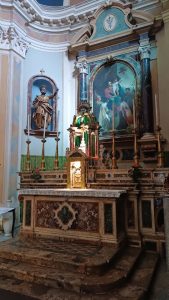 Originally from Roncate, near Lecco, and also known by the name “Luganese”, this skilled sculptor moved to Capo di Ponte in the second half of the 18th century, where he opened a workshop specialising in stone and marble craftsmanship.
Throughout his career, he received prestigious commissions both in Valle Camonica and in the Brescia plain. In 1758, he signed a contract for the creation of the main portal of the parish church in Orzivecchi, a municipality to which he returned in 1766 to sculpt the high altar, commissioned by the parish priest, Don Giovanni Francesco Ricci, who was originally from Malonno. During the same period, he was also active in Corteno, where he worked on the Altar of the Rosary, and in Sellero, where, in 1764, he created the tabernacle for the parish church.
Among his most prestigious works is the high altar of the parish church in Cemmo, commissioned in 1772 by the Vicinia (local community council) and the Confraternity of the Blessed Sacrament. A valuable archival document relating to this project has been preserved, providing a detailed list of the various types of marble and precious stones used in its construction.
His workshop in Capo di Ponte became a major centre for local craftsmanship, serving as an artistic training ground for numerous apprentices, including members of the Lascioli, Silva, Bona, Togni and Moncini families.