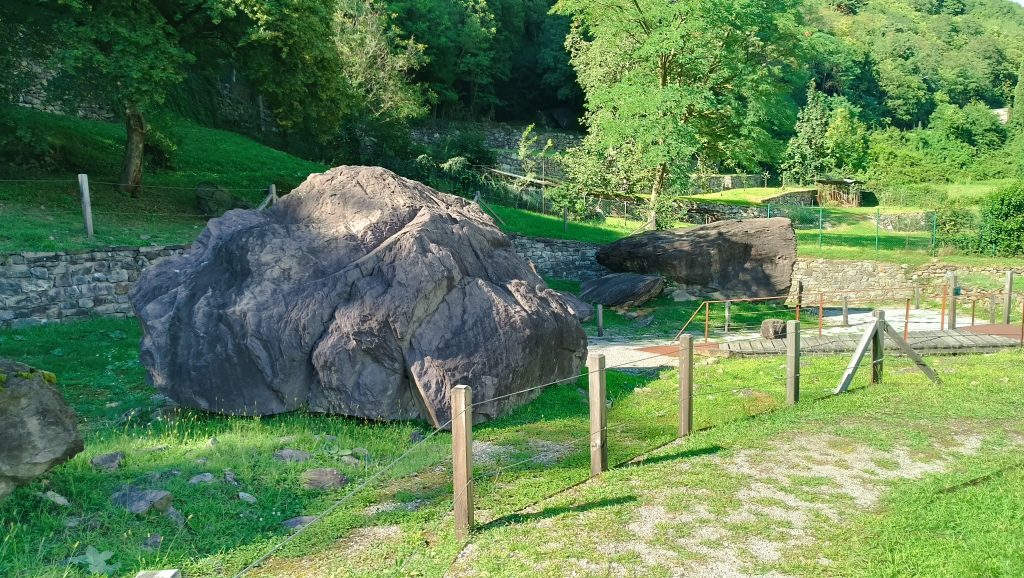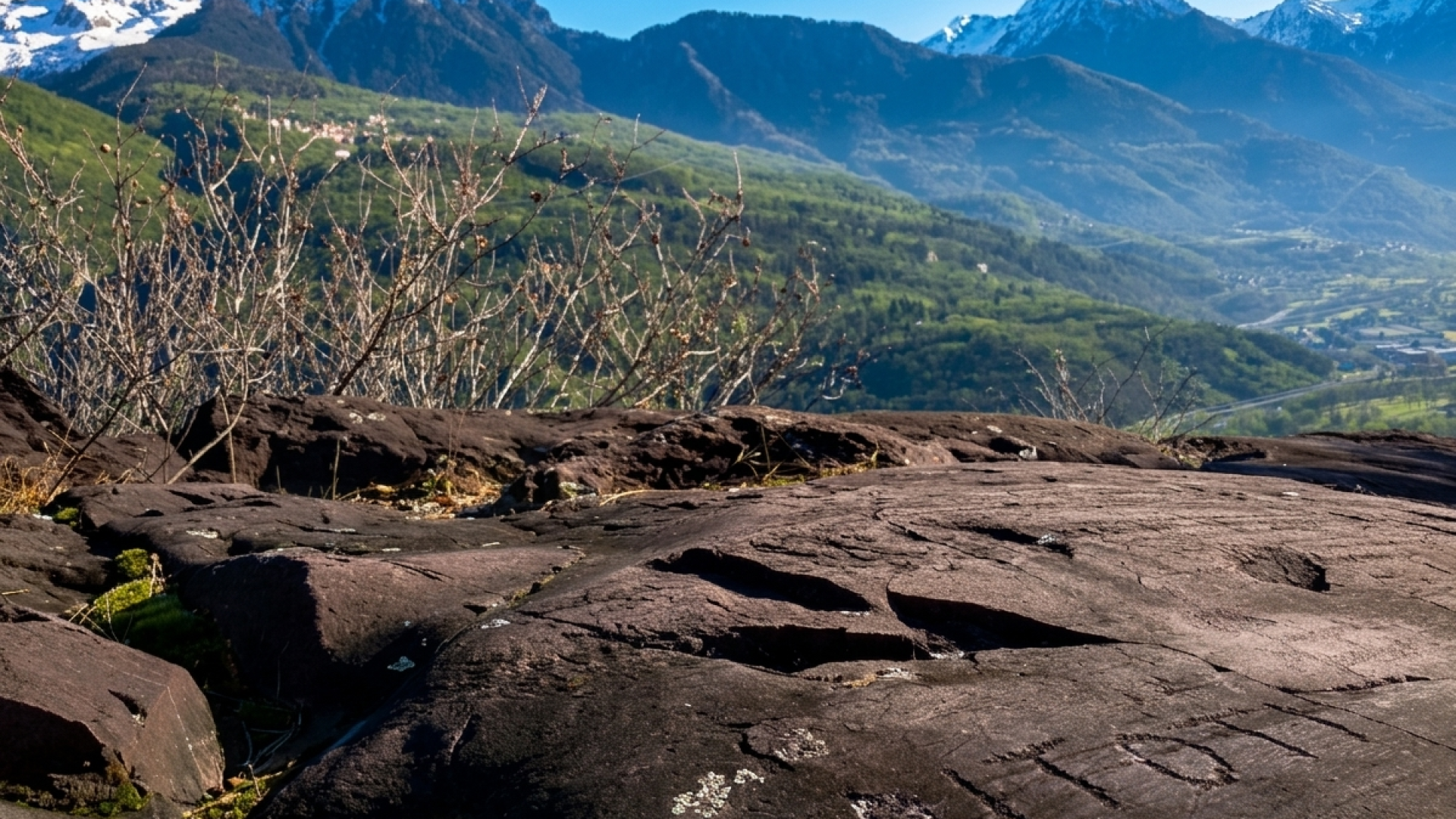
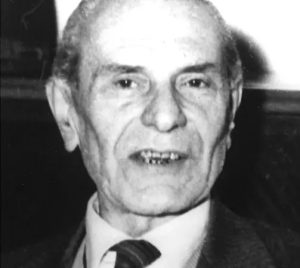
 Although the rock engravings had been visible to everyone in Valcamonica for centuries, the first report of petroglyphs on the Cemmo Boulders was made by Walther Laeng in 1909. The discovery attracted public attention in 1914 thanks to the Touring Club Italiano’s Guide to Italy.
Interest in the rock engravings of Valcamonica grew in 1929, when anthropologist Giovanni Marro (University of Turin) and scholar Paolo Graziosi (University of Florence) independently began the first research studies.
In the following years, Marro extended his explorations to much of the eastern side of the valley, discovering key sites such as Naquane, Foppe di Nadro and Paspardo. Meanwhile, on the western side, Raffaello Battaglia began research on behalf of the Royal Archaeological Superintendency, thereby laying the foundations for the first iconographic comparisons on a European scale.
During the 1930s, Camunian rock art attracted the attention of German scholars, including Leo Frobenius, Franz Altheim and Erika Trautmann, who studied the connections between the ancient Camuni people and Germanic peoples.
 Following the interruption caused by the war, interest in the rock engravings experienced a renewed revival in the post-war period, thanks to the efforts of Walter Laeng, together with a group of scholars from Brescia affiliated with the “Gruppo Naturalistico Giuseppe Regazzoni”, including Emanuele Süss and Italo Zaina.
This renewed enthusiasm led, in 1955, to the formal establishment of the Naquane National Park of Rock Engravings, on the initiative of Superintendent Mario Mirabella Roberti.
At the same time, the discovery of the first decorated standing stones at Borno and Ossimo opened up an important new field of research into Copper Age engraved stelae
The arrival of archaeologist Emmanuel Anati in 1956 marked a turning point towards a comprehensive and systematic study of the Camonica Valley, culminating in the publication of La civilisation du Val Camonica (1960). Around 1964, the Institute for Brescian Prehistory and the Centre for the Study of Rock Engravings were established on the initiative of the Milan Superintendency. During the same period, Anati founded the Camunian Centre for Prehistoric Studies (CCSP) in Capo di Ponte.
Anati’s work had a profound impact on the following decades, both in methodological and public outreach terms. He introduced new documentation techniques, established a stylistic periodisation of the rock engravings, and actively promoted greater awareness of this cultural heritage.
 In 1979, Valcamonica became the first Italian site to be inscribed on the UNESCO World Heritage List, under number 94. From the 1980s onwards, research and documentation activities became increasingly sophisticated, with ongoing research campaigns conducted throughout the Camonica Valley.
Among the most significant research organisations active in the late 20th century were the CCSP’s Valcamonica and Lombardy Department (1987) and the Le Orme dell’Uomo Cooperative (1988). Working in close collaboration with the Superintendency, they documented and published numerous engraved rocks and several rock art sites.
Research and studies continue to this day, with new discoveries and interpretations enriching our understanding of Valcamonica’s rock art heritage year after year.
Further information
The first systematic interpretative framework for Valcamonica rock art was developed by Emmanuel Anati in his work La civilisation du Val Camonica (1960). He established a relative chronology based on stylistic analysis, divided into distinct periods, spanning more than ten thousand years of Valcamonica’s history, from the Epipalaeolithic to the Modern and Contemporary periods.
From the 1980s onwards, excavation campaigns conducted by the Archaeological Superintendency and various university institutions supplemented the stylistic analysis of the engravings with a wealth of archaeological data, in some cases making it possible to correlate the stylistic sequence with the absolute archaeological chronology.
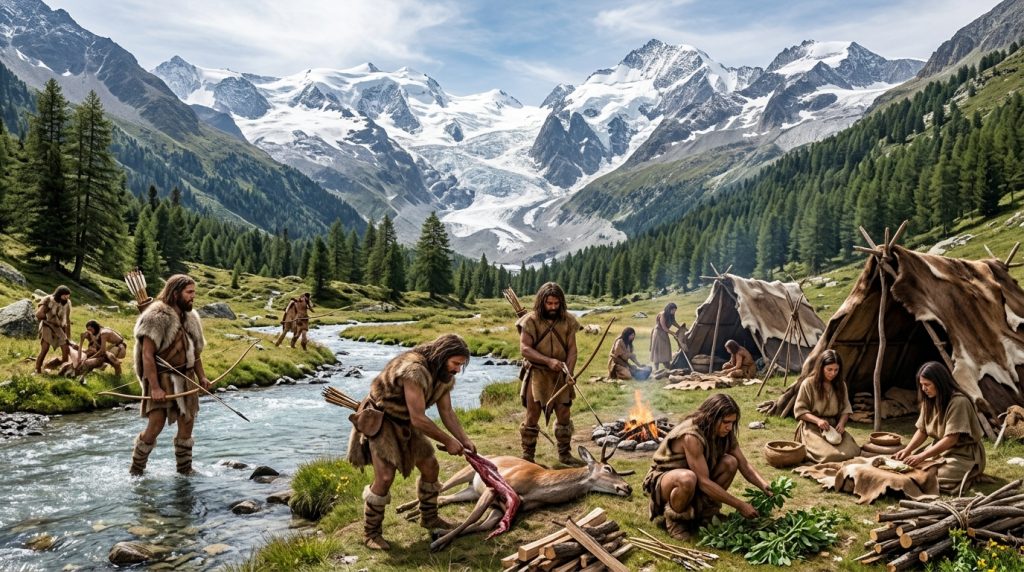
Between 15,000 and 13,000 years ago, the retreat of the Würmian glaciers transformed the environment of Valcamonica, encouraging the growth of lush vegetation that attracted wildlife from the plains, followed by small groups of hunter-gatherersat Cividate Camuno, Upper Palaeolithic–Late Epigravettian dwelling structures have been discovered, dating to approximately 13,800 BP.In Valcamonica, this earliest phase of rock art is represented by a small number of large animal figures, found mainly in the Luine Rock Engravings Park in Darfo Boario Terme.
In the 6th millennium BC, improving climatic conditions favoured the spread of Neolithic innovations throughout the Alpine region, leading to the development of agriculture and animal husbandry, the introduction of pottery, and the emergence of the first permanent settlements. In iconographic terms, the earliest human figures, together with symbolic and geometric elements (rectangles, circles and dots), are attributed to this period.
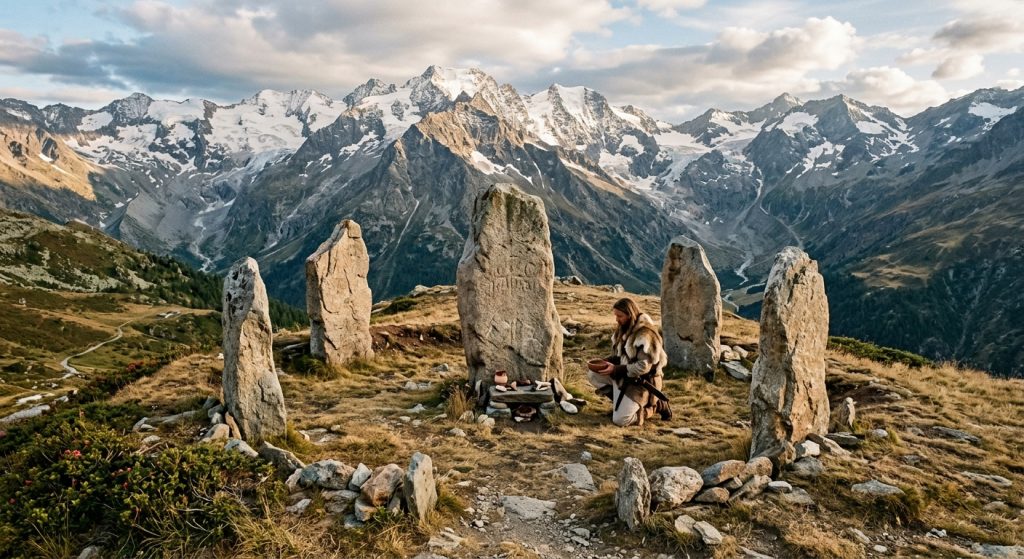
From the mid-4th millennium BC onwards, the plough, the wheel and animal traction were introduced, alongside sheep and cattle breeding, dairy production and weaving. Copperworking gave rise to an early form of metallurgy, leading to the production of ornaments, tools and prestige weapons, providing the first evidence of social stratification.
Within this context, megalithic sanctuaries spread throughout the region (such as Cemmo and Anvòia in Ossimo), where large boulders, possibly associated with ancestor worship, were engraved with symbols, weapons, ploughing scenes and human figures.
During the 2nd millennium BC, the widespread adoption of bronze, an alloy, led to the replacement of copper in the manufacture of tools and, above all, highly effective weapons . Society is thought to have evolved towards a strongly hierarchical and war-oriented structure, whose values were reflected in the rock engravings, featuring numerous depictions of weapons, possibly expressing the consolidation of a warrior elite.
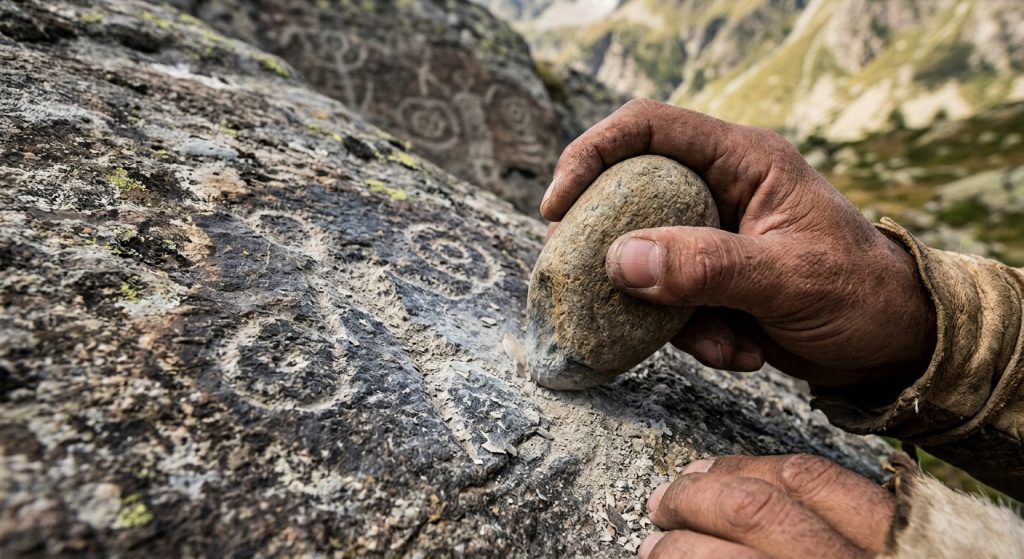
The introduction of ironworking technology in the 1st millennium BC, using an ore naturally found in Valcamonica, strengthened the local economy, bringing wealth to local aristocracies and consolidating social structures. Cultural and commercial contacts developed with the Etruscan-Padanian, Venetic and Hallstatt cultural spheres (8th–6th centuries BC) and, following the Gallic invasions of the Po Valley, with the Celts of the La Tène culture (4th–3rd centuries BC).
This period witnessed the peak of rock engraving activity, accounting for an estimated 70–80% of all figures known today in Valcamonica. Rock surfaces became covered with hundreds of depictions of duelling scenes, huts, labyrinths, footprints, inscriptions in the North Etruscan alphabet and hunting scenes.
In 15–16 BC, Augustus launched the conquest of the Alps, and the Camunni population was also conquered and subjugated, as commemorated on the Trophy of La Turbie. During the 1st century AD, the inhabitants of Valcamonica gradually became integrated into the Roman Empire, eventually organising themselves into the Res Publica Camunnorum during the Flavian period.
The main urban and political centre of the region was present-day Cividate Camuno, where impressive public buildings were erected, including the forum, theatre and amphitheatre. Integration into the Roman administrative system led to the gradual decline of the centuries-old tradition of rock engraving.
Although the processes of romanisation and christianisation transformed the prehistoric cultural landscape, the tradition of engraving rock surfaces survived over the centuries. During the Middle Ages and the Renaissance (14th–16th centuries AD), this practice resurfaced particularly prominently at Campanine di Cimbergo, where literate individuals added inscriptions, dates, Solomon’s knots, keys and castle depictions.
This centuries-old rock engraving tradition left its mark well into the 20th century, as demonstrated by several examples, including the commemorative inscriptions dating to 1908 on Monticolo Hill in Darfo Boario Terme (associated with the construction of the railway) and the figure of the Alpino (Alpine soldier), surrounded by dates from the 1920s and 1940s, on the Great Rock of Naquane.
What Are Rock Engravings?
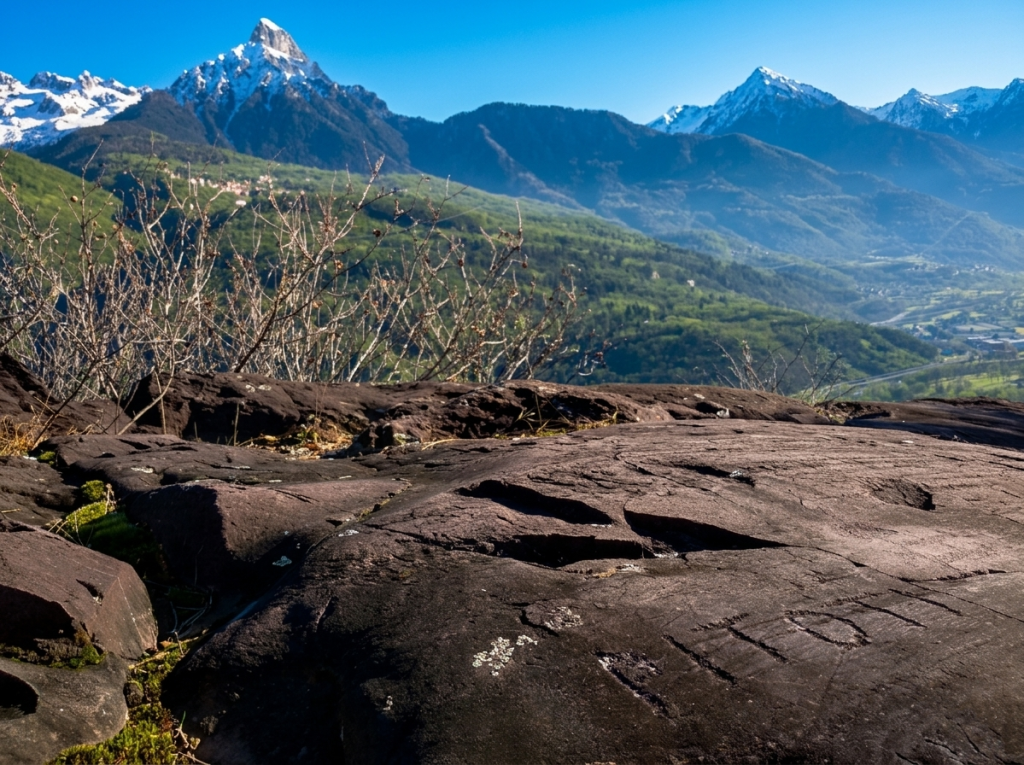
They are marks, symbols and images intentionally carved by humans through the direct removal of material from natural rock surfaces, consisting largely of sandstones and siltstones (Lombard Verrucano) smoothed and shaped by the passage of Quaternary glaciers. In scientific terminology, they are also known as petroglyphs.
How Were They Made?
Mainly using two techniques: percussion (striking the rock directly or with flint or metal chisels) and incision (scratching the surface with pointed tools). They were also probably painted.
Are Rock Engravings Found Only in Valcamonica?
No, rock engravings are found all over the world. However, Valcamonica is one of the world’s most renowned and significant rock art areas in terms of the quantity and variety of subjects represented, as well as the chronological span they cover.
How Many Rock Engravings Are There in Valcamonica, and Where Are They Concentrated?
To date, more than 140,000 rock engravings have been documented, although some estimates put the total at 300,000, spread across approximately 1,900 rock surfaces. The sites are distributed throughout the entire 80-kilometre-long valley, with the highest concentration in Middle Valcamonica (in the municipalities of Ceto, Cimbergo, Paspardo, Capo di Ponte and Sellero), within a hilly belt generally ranging from 200 to 1,400 metres above sea level.
What Period Do the Valcamonica Rock Engravings Date Back To?
They span an extraordinary period of approximately 13,000–15,000 years. The earliest evidence dates back to the Late Upper Palaeolithic and the Mesolithic, while the peak of rock engraving activity occurred during the Iron Age. The tradition of carving rock surfaces continued through the Roman, Medieval and Modern periods, extending well into the 20th century.
Why Were the Rocks Engraved?
In the absence of direct written sources, the corpus of prehistoric engravings is generally interpreted as a form of ideographic proto-writing, intended to transmit myths, collective memories and the community’s worldview.
Petroglyphs are thought to have served a variety of purposes: educational and instructional functions; sacred and propitiatory purposes connected with rites of passage and initiation ceremonies; votive functions through the symbolic reproduction of offerings; the consecration of territory; and the commemoration of places of worship dedicated to ancestors or deities.
Over a period spanning thousands of years, marked by the continuous evolution of cultures and worldviews, the deeper meaning of this heritage remains partly shrouded in mystery to this day, also due to the absence of mythological narratives passed down from the past.
What Are the Must-See Sites for Viewing Rock Engravings in Middle Valcamonica?
If you want to explore the area’s rock art, the essential sites include the renowned Naquane National Park of Rock Engravings, the Seradina-Bedolina Municipal Archaeological Park and the Cemmo Boulder National Park, as well as the numerous areas within the Ceto, Cimbergo and Paspardo Nature Reserve (Foppe di Nadro, Campanine, Sottolaiolo, and others).
For a first visit or for those with limited time, the best-equipped sites are Naquane, Foppe di Nadro and Seradina.
How Much Time Should You Allow for a Visit?
It largely depends on the site you choose: the larger parks, with their extensive trails (such as Naquane, Foppe di Nadro or Seradina), can easily take two to three hours to explore. By contrast, a visit to the Cemmo Boulders, Bedolina or Sottolaiolo takes approximately 30 to 45 minutes.
Is It a Suitable Excursion for Children?
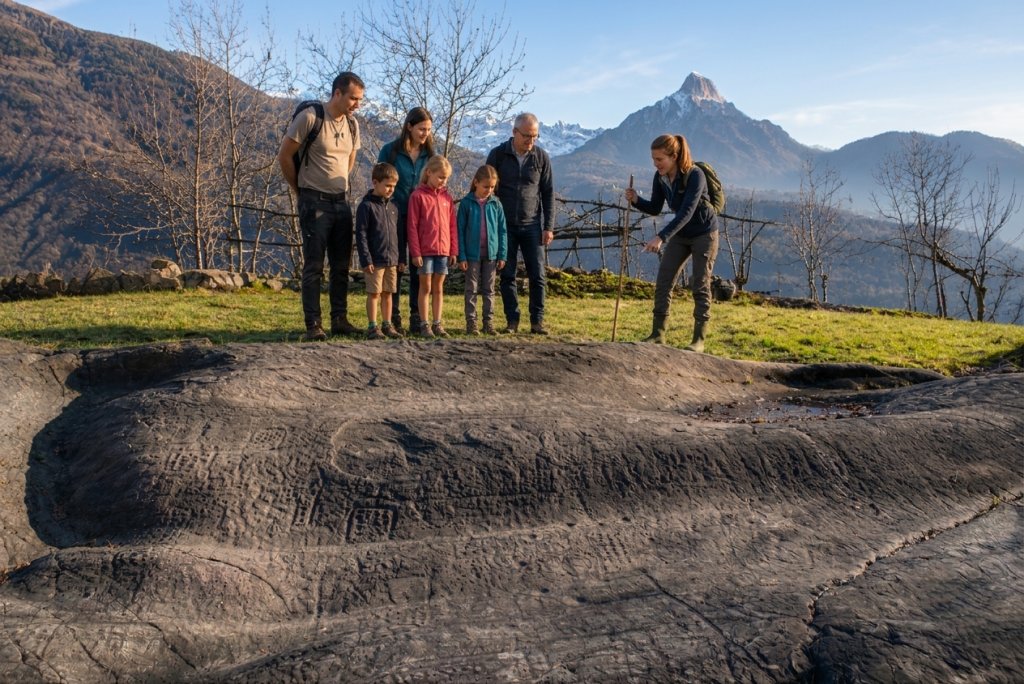
Absolutely! Many of the trails are ideal for families. By choosing the right route according to the children’s age and the season, younger visitors can have a great time, especially if they take part in guided tours specifically designed for them or in interactive workshops (find out more).
Is It Worth Hiring a Guide?
It is not compulsory, but it is highly recommended. Petroglyphs are not always easy to spot, and having someone explain the meaning of the symbols and the context of the UNESCO site makes a real difference, turning the walk into a much more engaging experience (find out more).
What Is the Best Time of Year to Plan a Visit?
Spring and autumn are the ideal seasons, thanks to their mild and pleasant weather. The angle of the sunlight makes a real difference when viewing the rock engravings: midday sunlight, shining directly down onto the rocks, flattens the figures against the surfaces, making them much harder to spot.
What Kind of Footwear Should I Wear?
You will need comfortable shoes, preferably lightweight hiking or walking shoes, and should avoid smooth-soled footwear. The parks feature unpaved nature trails, with uphill sections and uneven terrain, so proper foot protection is essential for walking safely.
Please be careful not to step on or scratch the rocks: treat them like priceless works of art in a museum gallery, deserving the utmost respect!