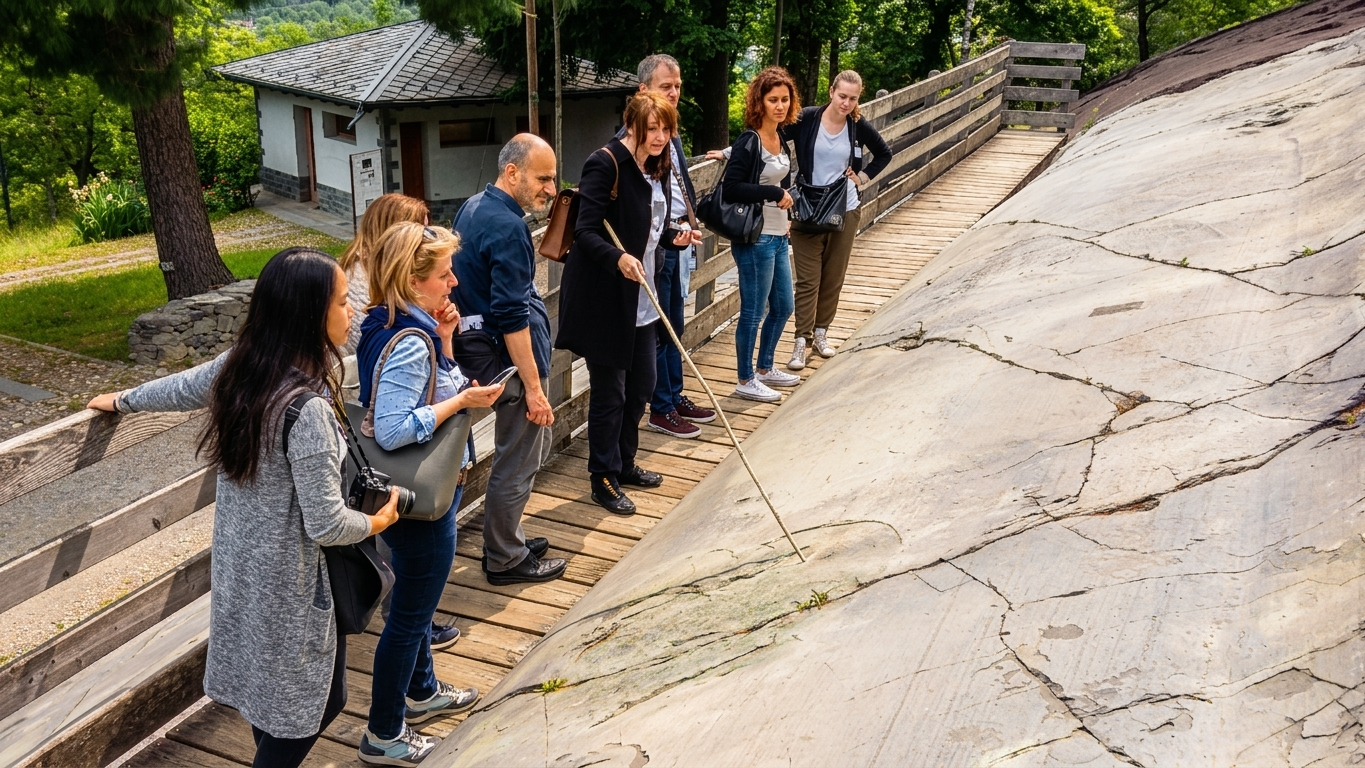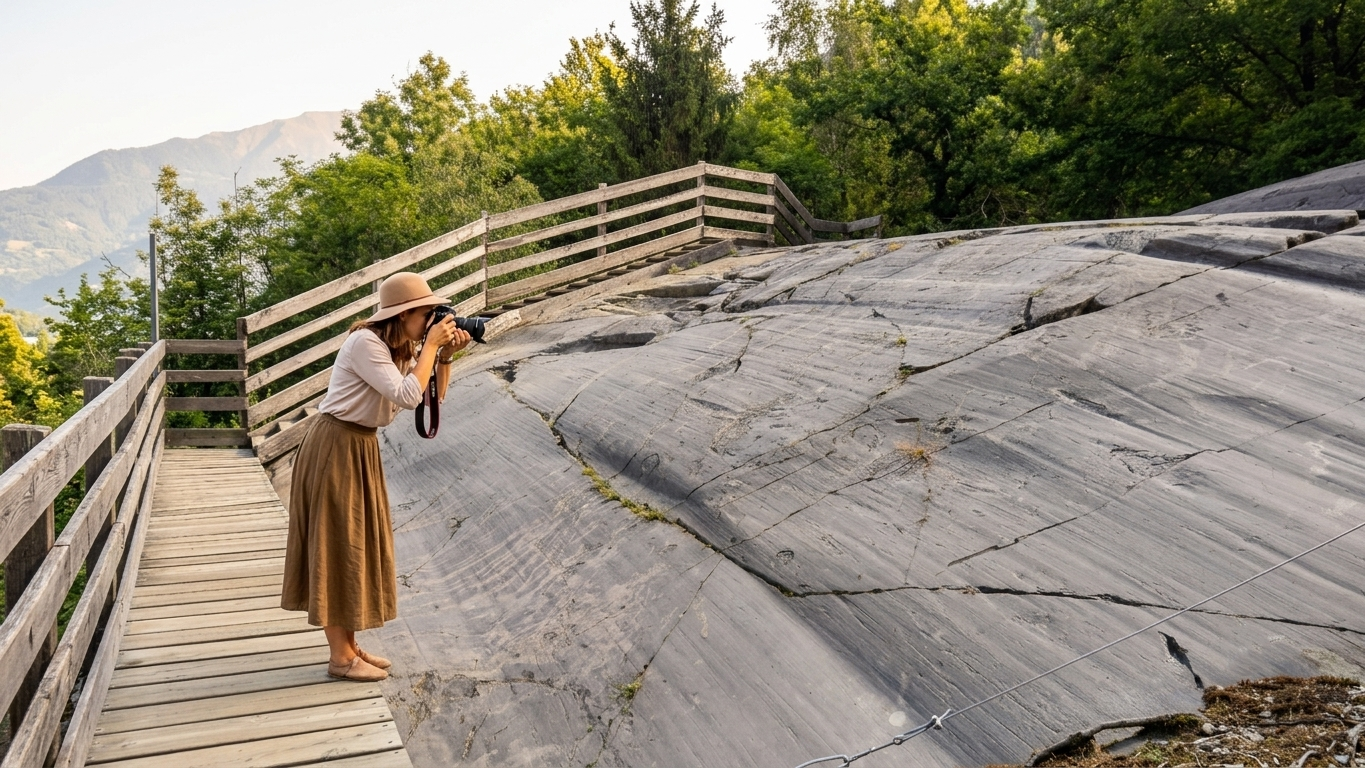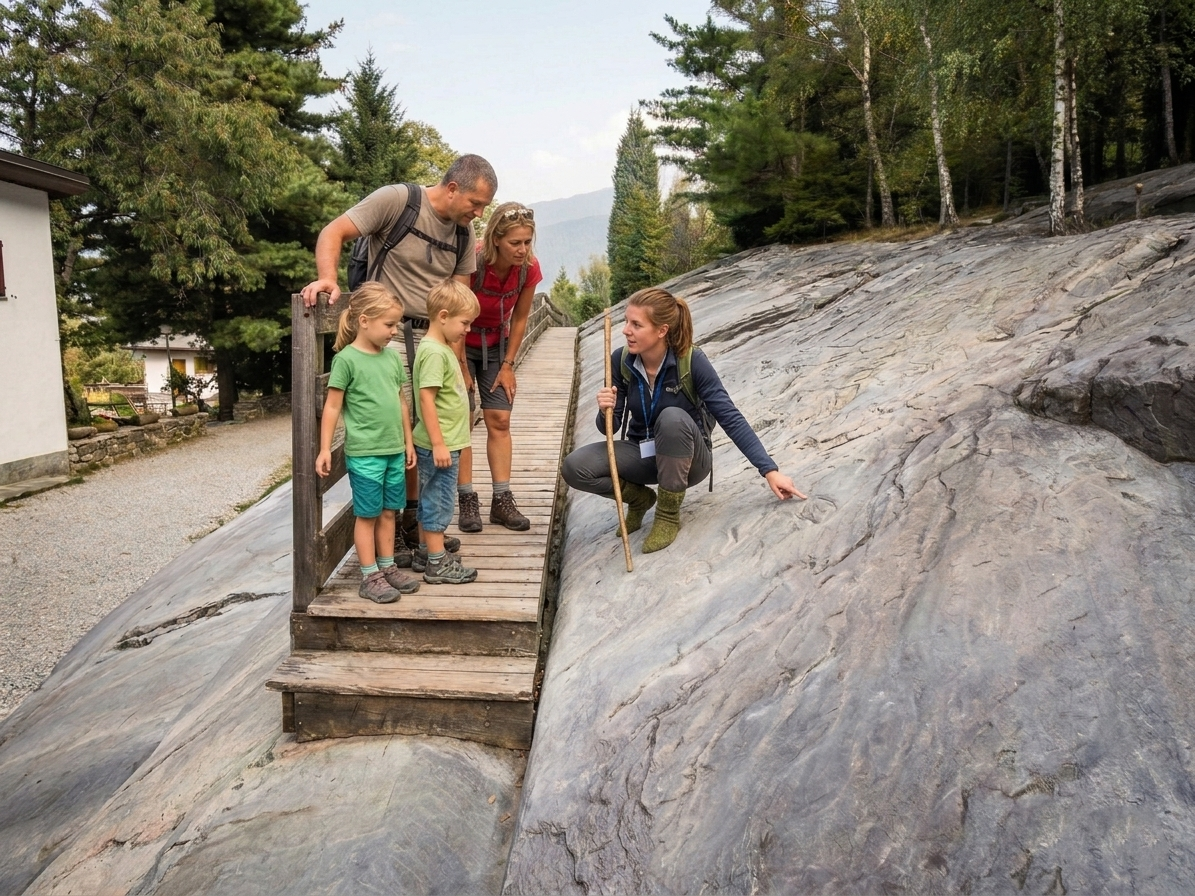
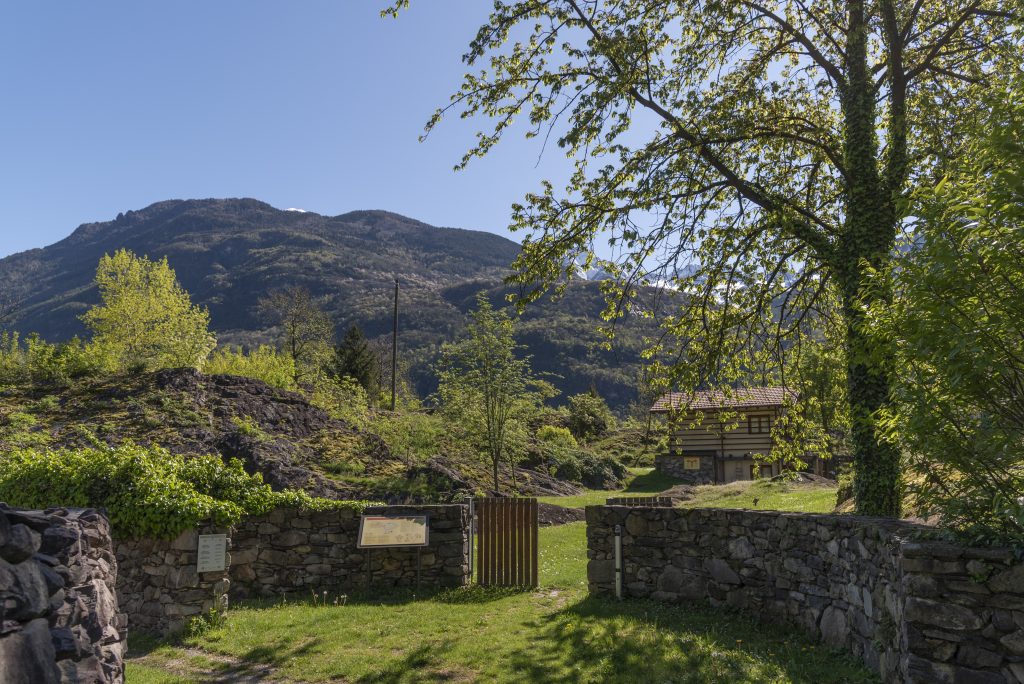
Established in 1955, the Naquane National Rock Engravings Park is the oldest archaeological park in Italy and represents the very heart of the discovery of Camunian rock art. It extends across a wooded hillside above Capo di Ponte, along a well-equipped trail that allows visitors to observe more than one hundred engraved rocks up close, spread along clearly signposted paths.
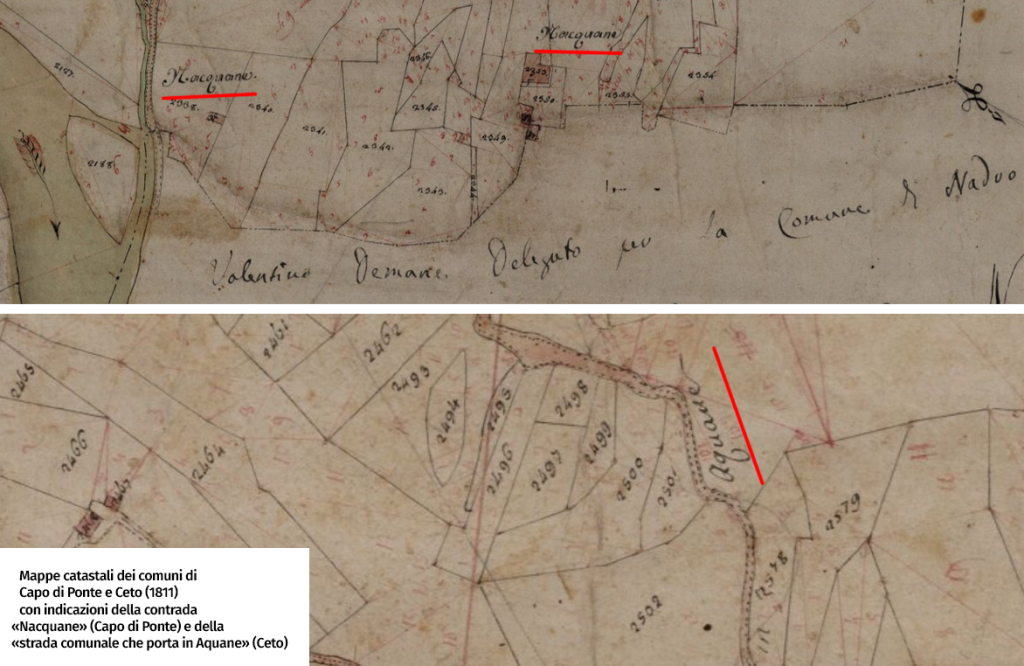
The park extends across the municipalities of Capo di Ponte and Ceto, covering an area historically known as “Aquane”, recorded in a 19th-century cadastral document as “Nacquane” and now known as “Naquane”.
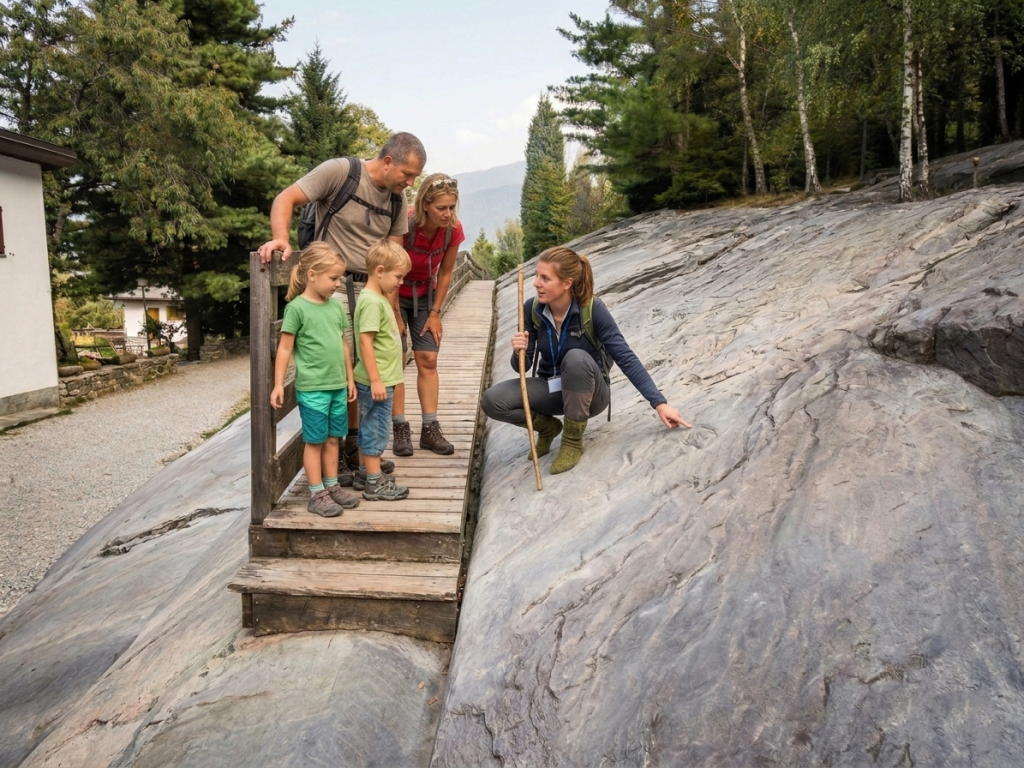
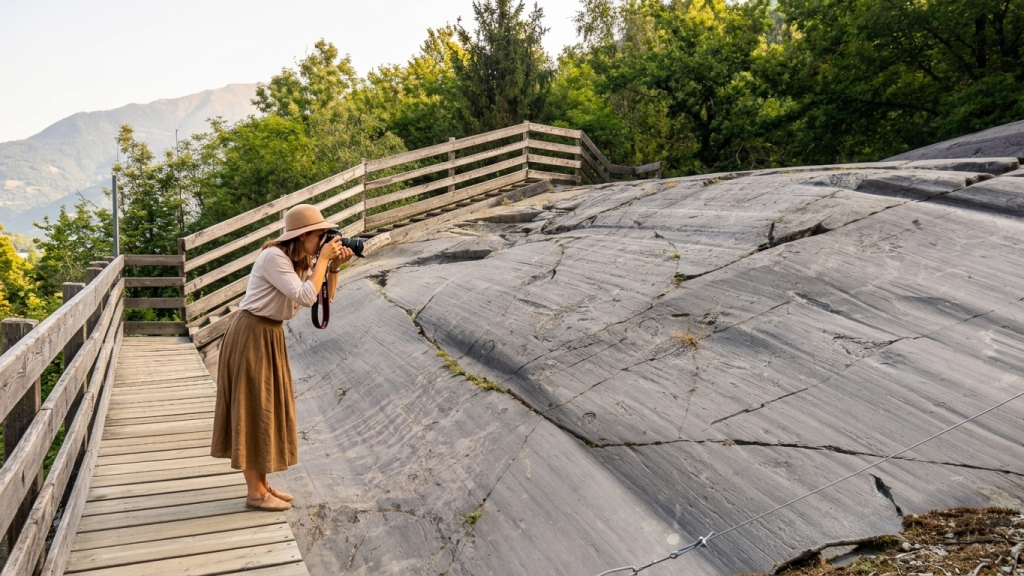
The trail winds through abeautiful natural setting, among chestnut trees, oaks and sandstone surfaces smoothed by glaciers. The engravings stand out on the rock surfaces, particularly in the early morning light, revealing details that change throughout the day and make every visit a unique experience.
Explanatory panels accompany visitors along the trail, providing accessible yet in-depth insights into the rock engravings. The park features accessible paths and trails of varying lengths, withseveral resting points and panoramic views over the Camonica Valley.
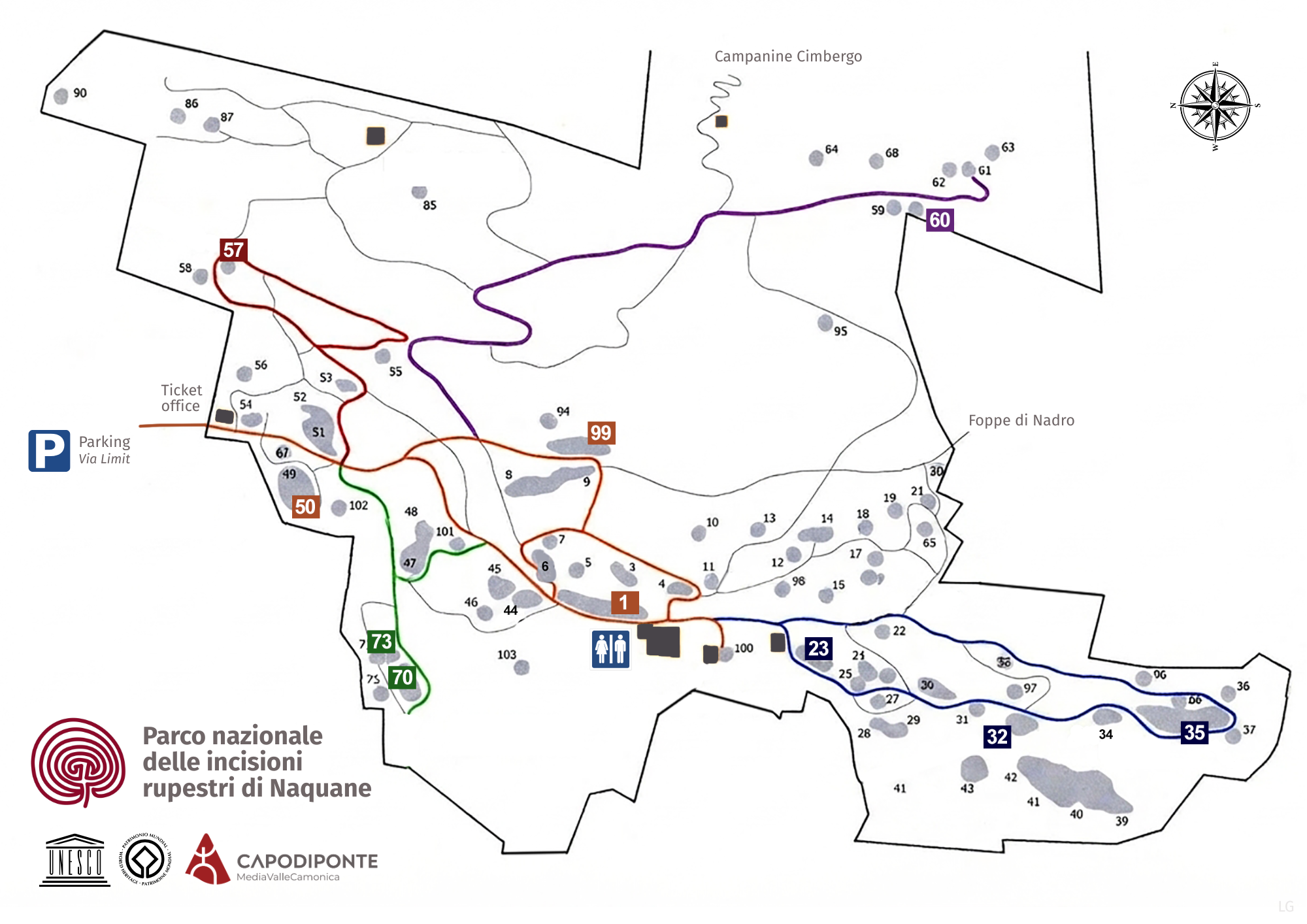
Rock 50 is distinguished by the high frequency of human figures interpreted as being depicted in a posture of worship (the classic “worshipper” pose, with arms raised towards the sky and a stylised body). The rock panel also features large figures of armed warriors, an “acrobat” on the back of a horse, and several inscriptions engraved in the ancient Camunian alphabet, derived from the Etruscan script.
Located along the Park’s orange trail, next to the ancient connecting road to Foppe di Nadro, Rock 99 features an exceptionally rich collection of engravings, including duelling scenes, animals, footprints, small spatula-shaped figures, buildings and grid patterns.
Its most distinctive feature is the presence of a Latin inscription
(SEC CON F/ OUF/ P P). This evidence demonstrates that the tradition of rock engraving in the Camonica Valley did not come to an end with the Roman conquest, but continued throughout the historical, medieval and modern periods.
 Rock 1 – The Great Rock
With an extraordinary concentration of over 2,000 petroglyphs , Naquane Rock 1 (also known as the Great Rock) represents an iconographic heritage of European significance.
From the walkway at the southern entrance, visitors can observe, on the upper slope, figures of deer, human figures wearing elaborate headdresses, paddle-shaped figures, vertical looms and a labyrinth featuring figures engaged in a duel.
On the lower slope, a curious bust of an Alpine soldier can be seen, depicted with a feather in his hat.
The northern section of the rock features a dense collection of deer figures, among which hunting scenes involving the use of dogs stand out.
On this rock, it is possible to observe an engraved horse-drawn chariot, depicted using an original technique of dual perspective: the body of the chariot is shown from a bird’s-eye view (from above), while the spoked wheels and the two horses are depicted in profile. Although the chariot may appear fragmented and unnatural, the observer intuitively perceives the «idea of a chariot» in their mind.
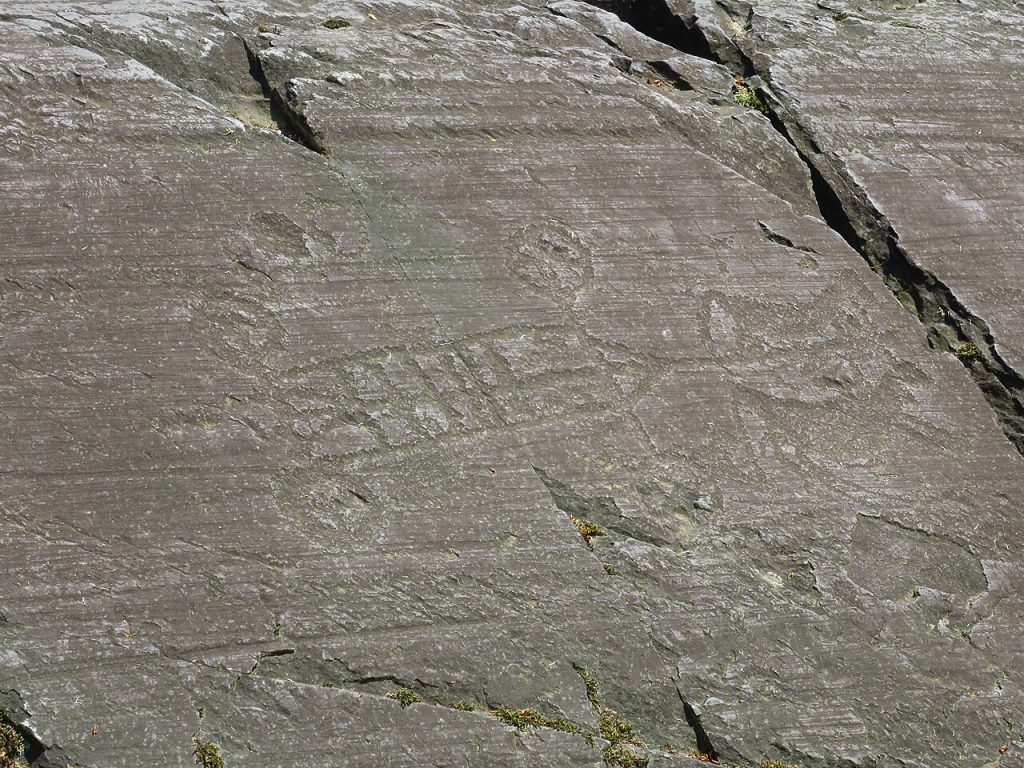
Several schematic female figures are engraved side by side on this surface. They are identifiable by a small circular cup mark between their legs, alongside a figure depicted in a reclining position. The scene is generally interpreted as a female ritual, possibly associated with childbirth or a moment of funerary mourning.
Rock 35 features some famous engravings, including the well-known anthropomorphic figure known as the “Running Figure” (or “Running Priest”), who wears an elaborate radiating headdress (possibly adorned with feathers or horsehair). The figure is depicted in a dynamic pose, with one arm raised, the other bent at the hip, and the lower limbs bent as if running.
Another section of the same rock reveals an elaborate settlement scene known as the “Village”, featuring engraved buildings that offer a glimpse into the social life of the ancient inhabitants of the Valley.
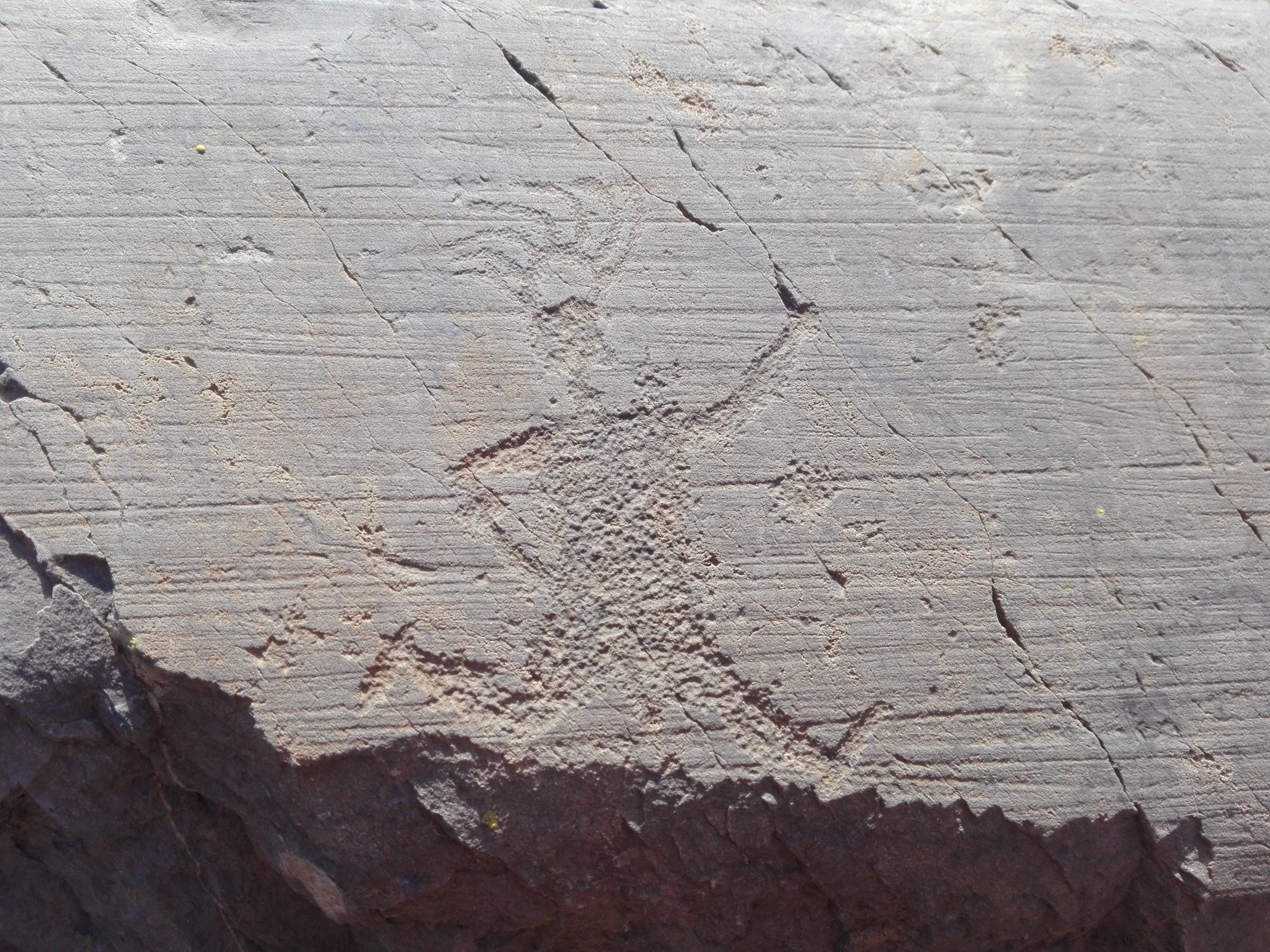
Rock 73 provides extraordinary evidence of alarge engraved building, depicted with an exceptional level of detail. It features a staircase, suggesting a two-storey structure, and a richly decorated pitched roof with clearly defined supporting beams, radiating circles and hook-shaped elements positioned along the ridge.
A short distance away, on Rock 70, lies one of the park’s most fascinating mythological depictions, interpreted by some scholars as the celt god Cernunnos. He is characterised by imposing deer antlers, an armlet on his arm and a knife in his hand. He is accompanied by a praying figure with raised arms and a small solar boat emerging from his body. This deity has parallels in the transalpine world, particularly in the Gundestrup Cauldron (Copenhagen).
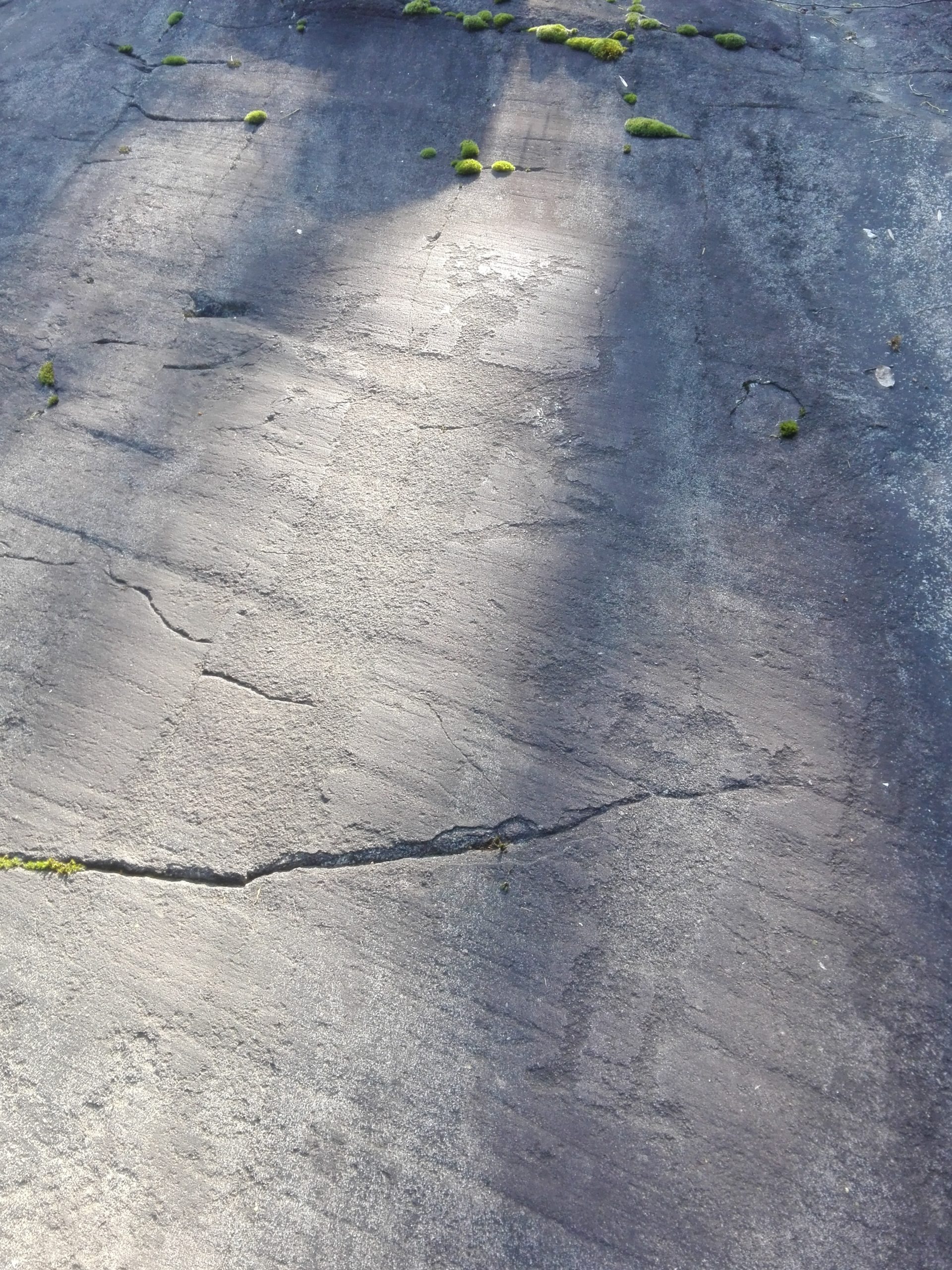 Rock 57 – Mounted Deer
Along the red trail, east of the entrance, Rock 57 features depictions of buildings supported by tall posts and curious scenesshowing men riding deer, which may be interpreted as mythical imagery or evidence of partial domestication. In the upper section, a detailed ploughing scene stands out, depicting a plough drawn by two horses.
Rock 60, located on the Còren del Valento, overlooking the valley and accessible only by request, preserves one of the most enigmatic symbols of the Camonica Valley: the famous “Camunian Rose”, now the emblem of the Lombardy Region.Various interpretations have been proposed, suggesting that it may represent an astral symbol, a musical instrument, a board game, or even a possible warrior banner.More than ninety Camunian Roses have been found in the valley, engraved in both the regular four-lobed from and irregular or swastika-shaped variations.
→ Scopri di più

→ Scopri di più
→ Scopri di più

→ Scopri di più
→ Scopri di più

→ Scopri di più
→ Scopri di più
→ Scopri di più
→ Scopri di più